“When you’re going to a gunfight, bring all your friends with guns. Having fought many times in coalitions, I believe that we need every ally we can bring to the fight.”
Jim Mattis
The National Association to Protect Children (PROTECT) came to California in 2003. Founded the year before, they were trying to roll back the “incest exception” that had cropped up all over the country in the 1980’s when San Jose CA psychologist Hank Giarretto and a sex-offender treatment lobby had supported legislation to lighten penalties for incest offenders. It was difficult to unravel their damage since it had become deeply embedded in California law.
But suddenly, PROTECT was there. We asked them to help us. They did. It was amazing.
PROTECT’s Executive Director Grier Weeks succeeded in skillfully lobbying for and removing the California incest exception. Wonderfully, the Sacramento chapter of Bikers Against Child Abuse (BACA) had contacted us. They could only help children who were in the custody of the safe parent, which did not generally help our kids. It turned out Grier was a biker also and enlisted BACA’s support for the process. I had imagined Grier as a towering, bearded mountain of a man, but quite to the contrary, he is the definition of urbane. It is his intelligence and strength of character that towers over mountains.


The first bill, SB 1803, was killed in committee. The bill’s author, Senator Battin, was a Republican in a mostly Democratic state. He was going against the tide with a bill that would not only cost money but was opposed by hopefully well-intentioned Democrats who usually wanted to support human rights.
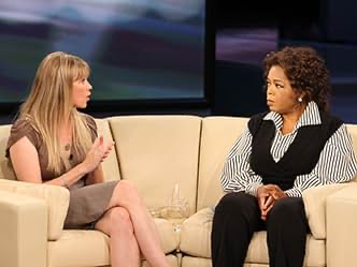
We met advocates and lobbyists Camille Cooper who played Nikki Langton on General Hospital and Alison Arngrim who played Nellie on Little House on the Prairie. They were part of PROTECT and moved Senator Battin’s next bill through a recalcitrant California legislature. We needed every bit of their star power.

It was very hard work. We wrote and delivered many letters of support. Bruce Perry MD testified on April 25, 2004 for the bill. A child can only heal by stopping the incest, according to Dr. Perry. PROTECT even posted pictures of CA senators who voted against the bill, to shame them.
With the combined help of BACA which gave amazing support, California Protective Parents Association, Incest Survivors Speakers Bureau, Child Abuse Solutions, Inc. and many others, the bill came to fruition in 2005 with SB 33 (Battin). It ended the incest exception which had allowed convicted incest offenders to receive a slap on the hand, probation, not prison, because supposedly they were different from other child sex abusers. They were not. Family predators were finally treated under the law just like other sexual predators. Rapists were no longer given the freedom to “grow their own victims.” It was a great triumph.
But accused pedophiles kept growing their own by getting custody of their children.
In September 2003, Karen was on a panel at the FVSAI San Diego conference titled Child Custody Issues in Family Court: Potential Problems for Abuse Women and Children with attorneys Dianne Post, Richard Ducote and Ruth Busch. Survivors had a workshop The Dance of Grassroots Activism.
The next week we presented a panel at the Battered Women’s Justice Project (BWJP) State Coalition Advocates and Attorneys Network (CAAN) conference in Tucson, AZ. Protective parent groups were popping up all over the country, including Arizona. We were amazed and happy that others thought our idea was worth replicating.
We spent hours on the phone trying to help distraught mothers in situations that were way beyond description. Karen did direct advocacy for protective parents and their children in the Sacramento area, while working full time as a domestic violence advocate at a women’s center. She helped mothers stay calm in court, which was beneficial. We found an ethical attorney for a teenager in distress, helped another teen insist his attorney properly represent him, and helped a child to visit her mother through a better court ruling.
We found a trauma therapist for a teenager who was back with his mother but was battering her after his father had battered him. We helped a mother find an attorney to help her move away and connected a mother with a housing non-profit. Jean Travis spent countless hours monitoring supervised visits and referring mothers to good professionals, while alerting them to the bad ones. I kept a list with two columns (one was short and the other was depressingly long) of good and bad professionals. Our activism helped a bit.
We submitted a government grant to pay an advocate. We were turned down flat.
On November 21, 2003, Yolo County celebrated the opening of the Multi-Disciplinary Interview Center, modeled on the Huntsville, Alabama Children’s Advocacy Center. The purpose was to interview children who reported sexual abuse on videotape which would be viewed by all involved agencies, so children were not subjected to the stress of multiple interviews. Cameron Handley was the power behind implementing the MDIC after Assemblywoman Lois Wolk had quietly worked behind the scenes to develop the program.
In 2003, Karen started the Courageous Kids Network. Father-abused, court-mistreated children wanted and needed a direct voice in court, not words that were muffled and distorted through biased professionals. The children were treated as chattel. They needed to try to protect themselves, since their mothers were prohibited from doing so.
Mediation seemed to be a focal point for domestic violence cases in California. In 2003, the Judicial Council completed the Domestic Violence in California Court-Based Child Custody Mediation study of parents and mediators. We wondered how a domestic violence victim could possibly mediate with a violent abuser, especially in the same room together. The noose would just tighten around her neck. And hanging in the balance would be an innocent child.
The study showed essentially what we already knew.
- Over three-quarter of parents reported interparental violence.
- 41% of children witnessed violence.
- In almost all cases, when violence was threatened, violence happened.
- Only 57% of cases had separate mediation sessions.
In January 2004, Professor Mo Hannah Ph.D. began the First Annual Battered Mothers Custody Conference (BMCC) at Siena College in Albany, New York with the help of her students. The objective was to “bring together protective mothers with experts and concerned professionals to address and organize around the serious injustices faced by mothers seeking protection from abuse from the family court/divorce court system.”

This was a truly helpful event. Mothers and ethical professionals did not feel alone.
That year, Renee Beeker, protective mother of six, launched the National Family Court Watch Project in Michigan. She worked with paralegals, law students, seniors and interns collecting data on a short narrative form in multiple states. She was onto something big. We learned about her work at the second Battered Mothers’ Custody Conference.

Court watch helped.
Ritual abuse was leaking out more and more. The toddlers’ testimony in daycare ritual abuse cases was being validated by adult testimony.
In December 2003, Ohio investigators reopened a cold murder case after two women accused Roman Catholic priest Gerald Robinson of ritually abusing them when they were girls between 1968 and 1978. Robinson was then accused of the 1980 ritual killing of 71-year-old Sister Margaret Ann Pahl who was choked and stabbed 31 times. Stab wounds formed an upside down cross on her front. There was blood on her forehead like a mock anointing. Robinson was found guilty of murder in 2006.

Ted Gunderson retired from his job as FBI Senior Special Agent in Charge of 700 other agents. He had helped with the investigation of the McMartin ritual abuse case and spoke at a March 13, 2004 Town Hall Forum with Congressman Joe Baca in San Bernardino, focused on reform of Child Protective Services which was not protecting children. Geraldine Stahly and Karen Anderson presented about the utter lack of protection of abused children of divorce.
Karen and I did a lot of driving in those days.