Dwight D. Eisenhower
In 2004, a Canadian study showed that sex offenders who received treatment in prison were no safer than those who didn’t. Just over 20% of both groups went on to commit other sex crimes and nearly half of both groups committed a later violent crime. “It is reasonable to conclude that the overall [treatment] program did not have any meaningful effect on recidivism rate,” said the study co-author Karl Hansen. A 2005 randomized study in the United States showed the same outcome. Treatment did not reduce recidivism significantly for rapists or child molesters.
“… sex offenders who received treatment in prison were no safer than those who didn’t.”
The New York National Organization for Women (NY NOW) demanded a Federal Investigation into family courts’ failure to protect abused children. They called it a national crisis. Irene Weiser from Stop Family Violence was involved. The press release cited Amy Neustein’s case and the cover up and quoted Eileen King, DC-based Regional Director of Justice for Children.
Again unknown to us, an appellate case Marriage of LaMusga was filed in the California Supreme Court which was argued by appellate attorney Tony Tanke of Davis with the assistance of attorney Kim Robinson of Oakland. The court laid out the factors for move-away cases when there are children. We later met with both attorneys and found nearby strong allies.
Our Tenth Annual Child Sexual Abuse Awareness Conference had two parts again. The main event on April 4, 2004 was titled Men in Robes.
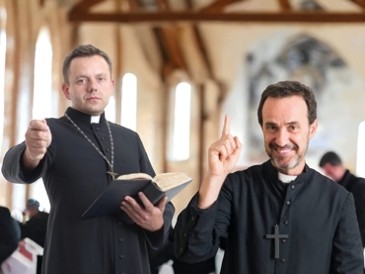
Phil Saviano from Survivors of Those Abused By Priests (SNAP) spoke about marauding daytime rapist priests. His investigation led to The Boston Globe articles exposing the Catholic Archdiocese of Boston sex abuse scandal, dramatized in the film Spotlight.
Jeanne Adams from Mr. Light and Associates and Deborah Parker spoke about marauding nighttime murderous rapist priests.
Karen Anderson spoke about judges in black robes who place children with rapists.


We honored the Courageous Kids. More quilts were displayed. More squares were made.We also honored Senator Deborah Ortiz and Assemblywoman Lois Wolk who presented Incest Survivors Speakers Bureau with a formal, framed Assembly Resolution. It was quite beautiful and reminds us how much we need a Museum of Childhood, like the Holocaust Museum, to honor the dead and wounded children and display our artifacts.
The next day was a full day on Trauma and Recovery from Ritual/Sexual Abuse at the Sacramento Sierra Health Foundation facility which was free to non-profits. Skilled trauma therapist Arlton Jackson spoke at that event, as well as a panel of ritual abuse survivors. We had many co-sponsors, including UC Davis Violence Prevention Center, California Alliance Against Domestic Violence (CAADV), California National Organization for Women (CA NOW), Child Abuse Solutions Inc. (CASI), Yolo County Sexual Assault and Domestic Violence Center, Yolo County Children’s Alliance and Child Abuse Prevention Coordinating Council, Family Violence and Sexual Assault Institute (FVSAI) and others.
It was a stunning two days, and it took a week to recover, in part because Karen and I were still working nearly full time at our day jobs.
There were lots of logistics putting on annual Child Sexual Abuse Awareness conferences sponsored by the Incest Survivors Speakers Bureau and CA Protective Parents Association. They were free public service events to educate the public and bring us together in a different, stronger way and were big undertakings.
They were free public service events to educate the public and bring us together in a different, stronger way.
We would decide on dates and a general topic and get a fee waiver for the expensive Veterans Memorial Center six months in advance. That way we didn’t need to charge an entrance fee, which would have been a whole separate layer of organization. Survivors didn’t have to apply for fee waivers for a conference about us. Everybody could come.
It was always a challenge to try to avoid April weekends with religious holidays, Picnic Day in Davis, and rain. We would usually learn the day before, and not in a positive way.
Then we would put together ideas, decide on the title, call speakers, decide on the order of speakers, get the quilt squares to the quilter (Lynn Fischer), figure out if we should or could offer continuing education units, find a CEU provider (Bob Geffner or Linda Barnard were so generous), make sure we had the right forms and language on the flyers for the CEUs, make and print flyers and programs, mail and distribute flyers all over Davis and Woodland, send out emails, post the details on the website, write up a media information sheet for the newspaper.
We paid for travel for the keynote speakers but had no other budget. We had to prepare for cancellations. We always had a little speech ready on the topic in case a speaker was not able to make it and we needed to pinch hit.
Arranging for lunch and snacks was tricky since most of us were squirrelly about food due to our childhood abuse, but we finally figured out how to take a hand count at the beginning of the event and call out for pizza or sandwiches. I would buy snacks and drinks beforehand. Often local stores donated them.
We would pick up the out-of-town speakers. They always presented for free. We would take them to dinner and arrange for lodging (usually my spare bedroom), get up at squeak in the morning the day of after filling the car with conference props and papers the night before, and meet the valiant set-up crew who would wrestle tables and chairs around, hang the quilts on the wooden frames (made by Lynn Fisher’s husband), set out food, get the CEU sign in sheets ready, hope the professionals who attended remembered to sign in and out
We would try to remain poised while trying to figure out who was going to pick up lunch and the afternoon speaker at the airport. We never knew how many people would be coming. It ranged from 50-200, with a different number every year. We got very “Zen” about it, figuring the right people would be there. And sure enough, they always were. The conferences always came off, almost like we knew what we were doing. We really didn’t, but God was good to us, and the audience was forgiving. Every time we survivors spoke out, we healed. We loved every event, for so many reasons.
That summer, we even had a 6 week film series on trauma and recovery, showing the Cavalcade Productions films and led by therapist Carol Joyce, PhD. It was called The Secret to Healing: Healing the Secret. We also had a party for the Courageous Kids to raise money for their upcoming trip to the FVSAI conference.
Protective mother Wendy Titleman from Georgia began her poignant 518 mile walk along the historic Trail of Tears from Missouri through Illinois, Kentucky and Tennessee, ending in Georgia, to bring media attention to the abused children placed with their abusers. Others joined her on the well-planned summer march, called “Let My Children Go! Journey on the Trail of Tears.” Her book was titled A Mother’s Journal: Let My Children Go.
Dr. Vincent Felitti, our indefatigable hero, continued educating through talks and articles, including:
- The Relationship of Adverse Childhood Experiences to Adult Health Status,
- Adverse Childhood Experiences and Their Relationship to Adult Wellbeing and Disease: Turning Gold into Lead.
In September, he gave the keynote address at the 23rd Annual UC Davis Western Regional Child Abuse and Neglect Conference in Sacramento. As he was nearby, he graciously agreed to come to Yolo County again, this time to present at the quarterly Policy Council of the Yolo County Children’s Alliance and Child Abuse Prevention Council.
It was a seminal event. Assemblywoman Helen Thomson, chair of the committee was a big proponent of helping people with mental illness and had never been a fan of our little band of survivors who kept saying that trauma underlay psychiatric symptoms. She missed the presentation but was intrigued by comments from her staff and other attendees. She took it upon herself to go to another city to hear another of Dr. Felitti’s presentation.
Later, I was sitting at the back of a meeting the Assemblywoman led. She stopped at some point, pointed at me, turned to the crowd and told them to pay attention to what I had to say. She announced that I had it right about trauma all along. Dr. Felitti was a miracle worker.
It was another Pyrrhic victory.
The Assemblywoman’s husband, psychiatrist Captane Thomson M.D. had been the director of the Yolo County Mental Health Department. He and his successor for a brief time, Steve Mayberg M.D., had left a legacy of medicating low-income trauma survivor patients and ignoring the trauma. The survivors would tell others about it in support groups.
Childhood trauma and injury for people who had the misfortune of being patients at YCMH were ignored. Instead of being given trauma therapy, they were hooked on potent antipsychotic medications. It was an unenlightened community care system, right out of the mental health Middle Ages.