“Wherever you go, go with all your heart.”
Confucius
On September 10, 2014, USA Today published a chilling article Parents Who Do the Unthinkable – Kill Their Children. Kathleen Russell had worked on the story for a long time. A three-decade examination of FBI homicide data showed that on average, 450 children are killed by parents each year. “‘Violence is a masculine pursuit,’ says Jack Levin, a Northeastern University criminologist. Fathers killed 60% of the children, mostly by beating (75%) or shooting (64%). Three-quarters of children killed by parents are under 5 years old.
The low number of 450 murdered children was surprising to me, since the Child Maltreatment annual reports from US Department of Health and Human Services showed that there were 1,546 child fatalities in 2014, of which 79.3% of involved parents acting alone, together, or with other individuals. That was nearly twice the FBI number. Either way, far too many children were being killed by their parents. Kathleen was collecting the histories of children killed in the context of their parents’ divorce and separation.
We flew back to Washington DC again, during Domestic Violence Awareness month. On October 1, 2014, we went to the White House for the Mother March at 11:00 am. Someone had jumped the fence a few days before so there were loads of security police. We kept getting shooed over to H Street because Netanyahu was meeting with President Obama.
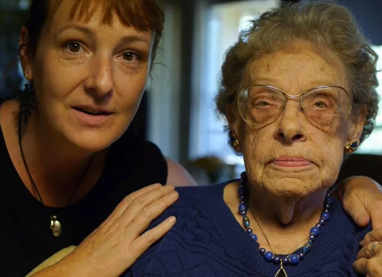
That turned out to be a blessing in disguise because we met up with Rachel Meyrick from Ireland who filmed us for her documentary What Doesn’t Kill Me. We might have missed her if we had done our usual march. Her film highlighted an elderly domestic violence victim.
On October 2, we met with Congressional staffers at the Cannon building in our white t-shirts. Mothers told their heart-breaking histories compressed into three minutes each, causing staff members to cry. We gave out packets of information and distributed Barry Goldstein’s new book The Quincy Solution: Stop Domestic Violence and Save $500 Billion and Beyond the Hostage Child by Leora Rosen and Michelle Etlin.
Andrew Willis, Barry Goldstein, Libby and I met with Elizabeth Darnell from Congresswoman Carolyn Maloney’s office, and with Ron LeGrand and Blair Bjellos, seeking a commitment for the Resolution. I met with Kaye Meier from Senator Boxer’s office and with Congressman Steny Hoyer’s staff.
We had not gotten traction yet but felt certain that our tenacity would eventually pay off. We were just too persistent and earnest to ignore. It was hard to resist 20 attractive, intelligent, assertive Mothers of Lost Children in white t shirts telling about atrocities.
We had an event that night at George Washington University Law School, again thanks to Joan Meier. The talk was titled Child Sex Trafficking, Judicial Trafficking in the U.S. and Beyond. Gypsy Marie Roberts author of Winona’s Righteous Warriors spoke on sex trafficking, I spoke on judicial trafficking, and Barry spoke on his new book The Quincy Solution which was unveiled that day. Back in California, Kathleen and I went to An Evening with Nicholas Kristof, Pulitzer Prize-winning writer and New York Times writer who focuses on human rights and social injustices on October 7 in San Francisco. We gave him information. He smiled politely.
We gave him information. He smiled politely.
We received an obscure reply from the Commission on Judicial Performance to a complaint we had submitted two and a half years earlier. “The commission has considered the matter and taken appropriate corrective action.” They neglected to mention what was corrected or even against whom the corrective action was taken. We had by then forgotten the complaint, since we had made so many on behalf of mothers and their children.
On a more positive note, we got a letter from Dale Nathan who founded the Minnesota Protective Parents Association as a 501(c)(4) non-profit. That was most encouraging. We needed one in every state.
Karen Anderson and I went to see Kill The Messenger in Sacramento, an amazing movie about Gary Webb who had exposed the CIA exchanging cocaine for guns to fund the Contras in Nigua. They sent crack cocaine to Watts, a rough neighborhood in Los Angeles, sold it on the street and got so much cash that they had to rent an apartment to hold it, rotating it so it wouldn’t get moldy.
Karen and I had met Gary and his friend Rebecca Miles from the Assembly Speakers office. He had come to one of Karen’s hearings in 2000, wanted to help, and by 2003, was found with 2 bullets in his head. It was called suicide. He was not at all depressed, according to Rebecca. So many people who investigated the rampant abuse of children ended up dead.
The big day came at last.
We attended our first Judicial Council meeting on October 27 and 28, 2014. The 21 voting Council members were bureaucratically arranged in large comfortable chairs in front of a horseshoe shaped table facing the front where the Chief Justice presided. Facing her, in the middle of the horseshoe, was a podium with a microphone. Members of the public could speak directly to Chief Justice Tani Cantil-Sakauye and the policymakers for the largest court system in the nation.

She had led the Judicial Council Domestic Violence Task Force, and we had briefed her informally at a talk she gave in San Mateo, so we knew she couldn’t deny the reality of family violence.
We were suddenly inside, instead of outside, which was an improvement. It was not half as fun as demonstrating but did appeal to my inner analyst. We quickly learned the protocol.
Kathleen presented and provided an excellent letter. Attorney Barbara Kauffman, Robin Yeamans, and Kim Robinson, protective mother Yupa, and advocates Kathleen, Steve, and I spoke. I described the Stahly research.
Mothers spoke with passion.
Emily Gallup, the Nevada County mediator, addressed the Council as an insider who was retaliated against and fired for trying to follow Family Code section 3118 when she tried to obtain criminal records about mediating parents. The immense irony was that the Judicial Council’s most well-known function was to make forms to standardize judicial proceedings yet fought us consistently when we tried to have them create a simple form to properly implement Family Code section 3118.
In a moment of comic relief, three Marin attorneys spoke, protesting emphatically how un-corrupt the Marin court was. They seemed to have known we were coming.
I was surprised to learn that Yolo County Judge Dave Rosenberg, whom I knew personally, was a member of the Judicial Council. He later told me that nearby Solano County was piloting a domestic violence court.
The next day, about 30 of us filed in again, and signed up to observe or address the Judicial Council and the Chief Justice for 1 minute each. A woman who introduced herself as Nancy Carlisle hurried out and stopped me, addressing me by name. She told me in no uncertain terms that I was not allowed to speak on the topic of the day, Self Represented Litigants, because I had spoken the day before.
Kathleen was likewise gagged. We assumed she was acting on behalf of the Chair and Justice Miller, the second in command. So, two mothers who had not spoken the day before signed up in our place. They were likewise gagged.
So, two mothers who had not spoken the day before signed up in our place. They were likewise gagged.
It was quite shocking. I explained to Ms. Carlisle that this is just how litigants are treated in family court and asked If we’d be arrested if we spoke anyway. She was silent.
We decided to keep going to the meetings and to try to get more press on the situation. We needed a Spotlight type of investigation, so Kathleen Russell, Barbara Kaufman and I met with Executive Director Robert (Rosy) Rosenthal, reporter Trey Bundy and three others from the Center for Investigative Reporting (CIR) in their Emeryville office on November 4, 2014.
Kathleen had previously met with Director Rosenthal who agreed this is a “human rights, children’s and women’s issue.” We spent many hours explaining a counterintuitive process that basically made no sense to normal people who were not on the ground in this dirty war against children. CIR seemed interested. Trey wanted a child sex abuse case to follow. Kathleen made an excellent slide series called The Judicial Trafficking of Children to Sexually/Physically Abusive Parents in Family Courts.
We hoped CIR would do what the Boston Globe did to break open the pedophile priest scandal, which was to write hundreds of articles focused on that one scandal, putting enough pressure to make something happen.
Many years later, in 2019, CIR finally did one lone NPR REVEAL story, titled Bitter Custody. We were disappointed but not surprised.