“Silence becomes cowardice when occasion demands speaking out the whole truth and acting accordingly.”
Mahatma Gandhi
I met with Tracy Kenny and Donna Herschkowitz from the Judicial Council on August 15, 2007. They were moving toward using mediators in a Family Dispute Resolution (FDR) Unit model. Half the counties had “recommending mediators” which was not mediation at all. This process spread throughout the state, basically giving court-employed mediators adjudication power since judges tended to rubber stamp their recommendations. They became court-employed evaluators for low-income parents. Really, they were usurping the judicial role.
We discussed the huge fees court-appointed private evaluators charged to evaluate crimes. I explained that courts were still using Evidence Code 730 to appoint evaluators instead of Family Code 3111-3118, which was an end run around the carefully crafted protocol. I reiterated that Family Code section 3112 was created to regulate fees and gave them the template Meera Fox used to train evaluators. They said they would put me in contact with their training point person George Ferrick, MFT. Unfortunately, he was the one who had approved child sexual abuse trainers who were in fact recycled parental alienation specialists.
It was just a bureaucratic process to them. To us, it was a life and death situation for children placed with violent or sexually abusive parents.
I also met with Assembly Judiciary Committee Deputy Chief Counsel Leora Gershenzon on August 27, 2007, who seemed interested in the dilemma.

The next year we met with Chief Counsel Drew Liebert who also seemed interested, but did not act when action was needed. We talked about the right time to focus on implementing a statewide, standardized form for evaluator reports, which would lead to a multidisciplinary team approach. The consistent ignoring of the protocols was beginning to get under my skin. It was so deliberate, such a finger in the eye of abused children and those working to protect them.
Then one day, Kathleen Russell, Executive Director of the newly formed Center for Judicial Excellence, called. She was making a film on the family court crisis and asked if I would like to be interviewed. I certainly would. We got together with her cameraman and felt like we’d already known each other for a long time. Kathleen’s presence and knowledge galvanized a lukewarm media, and as a lobbyist, she began to lead our lobbying efforts.
It felt like the cavalry had arrived.
On October 2, we went to a hearing by the Select Committee on Domestic Violence chaired by Assemblywoman Fiona Ma.

I presented data from the Stahly study, along with ideas for reform:
- Implement the approximation/primary parent standard for non-abuse cases
- Develop domestic violence courts, family justice centers and home visitation programs.
- Require proper investigations and standardized training
- Coordinate law enforcement and child welfare services investigations
- Give children a direct voice in family court and the ability to fire attorneys
- Disconnect child support from parenting time
- Videotape hearings
- Prohibit recommending mediators
- Prohibit changing custody in ex parte hearings
- Prohibit victims who make a police report from being forced into contact with the accused
- Administrative remedies or a Second Look Citizen Review Commission for effective oversight
Nothing happened at first, but we knew they heard us. It was the right committee for the issue. I was becoming increasingly interested in the Legislature.
The September Twelfth Annual IVAT conference in San Diego brought us together with good people.
On November 13, 2007, Center for Judicial Excellence presented the new film Family Court Crisis: Our Children at Risk. Kathleen said a viewer remarked that my part in the film somehow calmed people who were hearing the heartbreaking, hair-raising histories related by frantic mothers. Kathleen was already working on solutions and proposed the potential of Judicial Performance Evaluations, which many other states use. It was no mystery how the California Judiciary would react to accountability.
The California Judicial Council established the Elkins Family Law Task Force in December 2007. It was based on a case Elkins v. Superior Court, which held that “marital dissolution trials should proceed under the same general rules of procedure that govern other civil trials” and recommended establishing a task force to improve fairness and efficiency in family court. All relevant, competent evidence needed to be heard by the court, including direct witness testimony. There was a focus on the rising number of self-represented litigants, to ensure they were given a satisfactory opportunity to present their cases.
“Marital dissolution trials should proceed under the same general rules of procedure that govern other civil trials.”
We didn’t know anything about the Elkins case at the time.
I sent a formal proposal to Assemblywoman Lois Wolk regarding a bill to require a statewide uniform child custody report form for family court investigations into child abuse. This had become a bit of an obsession, since I could see no rationale for not having a form for the investigation process. The Judicial Council had about 2000 forms for everything else under the sun. Why not this?
That idea went nowhere.
Attorney author Alexis Moore began a Sacramento group called Survivors in Action that same year. She had been brought up as a child in a custody war and had to negotiate an escape from cyberstalking as an adult.
In January 2008, the Fifth Annual Battered Mothers Custody Conference (BMCC) in Albany NY was titled Help, Hope, & Healing. It focused on self-determination and empowerment of mothers and to the expansion of a growing protective mothers’ movement.
As part of the conference, the Family Court Reform (FCRC) held a meeting on January 11. This new national interdisciplinary group had a good shot at making real change. Director Irene Weiser facilitated an email list with interested professionals and advocates. Dianne Post took notes. FCRC members included Jan Kurth, Joan Zorza, Karin Huffer, Robin Yeamans, Barry Goldstein, Mo Hannah, Wendy Titleman, Monica Getz, Rita Smith, Nancy Erickson, Eileen King, Diane Hoffeimer, Kristen Hoffheimer, Claudine Dombrowski, Kalina DeSuze from VOW, Sandra Firestone, Janey, Carol White, Judge Sol Gothard, Paul Fink MD, Seth Goldstein, John Myers, Daniel Pollack, Lundy Bancroft, Karen and me.
It was pointed out that family court cases used to take only 4 months. We learned that all affiliated court professionals are public employees in Minnesota (no private evaluators and attorneys) who use a standardized process, with a time limit and no hearsay information. That sounded wonderful. We agreed that accountability was the crux, that strong oversight was crucial. Judges, mental health professionals, guardians ad litem, attorneys for minors were problems.
The ideas put forward were:
- Judiciary
- Open elections of judges.
- Judicial Performance Evaluations.
- Lay people on disciplinary committees.
- Independent ombudsperson.
- Court watch programs.
- Insider hotline for whistleblowers and protection for court employees and appointees.
- Timely administrative fair hearing on due process issues.
- Timely administrative complaint process.
- Jury trials.
- Flag case for review (based on time frame, findings and ex parte removal).
- Videotape all hearings.
- Eliminate coerced agreements.
- Curtail in-chamber deals.
- Disallow judges’ ruling on own motion to disqualify for bias, use a 3-person citizen panel.
- Statement of decision and reason for any change of custody.
- Disallow ex parte change of custody.
- Use the approximation standard/primary parent for non-abuse cases.
- For domestic violence and child abuse cases
- Specialized domestic violence courts.
- No mediation for domestic violence or child abuse cases.
- Standardized template for investigations.
- Multi-disciplinary interview team.
- Preponderance of evidence findings that err on the side of victim safety.
- Finding for each incident of domestic violence and who was dominant aggressor if there are counterclaims.
- If a child reports a violent or sexual crime to law enforcement, no contact with the accused until the accused is found not guilty in criminal trial and only at the child’s uncoerced request.
- Affiliated professionals
- Hear child’s direct voice if child wishes to speak to the court.
- Eliminate hearsay evidence (evaluations must be stipulated or they are just hearsay).
- Have strict competency exams for all professionals involved in family court.
- Use only public employees/eliminate private appointees. If appointees are used. regulate fees, time, number of cases, remove immunity, court pays for expert.
- Ensure child’s attorneys have an ordinary duty of care for the child. (Maryland).
- a) Child Advocacy Attorneys are appointed when the child needs a voice in court, such as in relocation cases, when there are allegations of child abuse, or where the child is sufficiently mature and sees his or her interests as distinct from the interests of the child’s parents. They provide independent legal counsel for a child and owe the child the same duties of undivided loyalty, confidentiality, and competent representation due an adult client.
- b) Eliminate “guardians ad litem” and Best Interest Attorneys who protect a child’s” best interests” without being bound by the child’s directives or objective, even if it requires the disclosure of confidential information.
- File lawsuits against police, CPS, physicians, others who ignore child abuse
- 3. Federal Intervention
- Disconnect child support from parenting time share.
- Fund standardized training, education, studies, programs, tracking of cases.
- Reform/remove fatherhood funding, or convert to Positive Non-Violent Parenting
- Reform access/visitation grants.
- Reform CAPTA.
- Reform Promoting Safe and Stable Families Act.
- Have GAO audit and studies.
I was most interested in the idea of a Congressional Resolution like the 1990 Congressional Resolution H Con Res 172 by Congresswoman Connie Morella. It was powerful legislation. All states developed laws against custody to domestic violence batterers, in accordance.
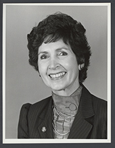
We were gathering excellent ideas. Karen and I felt the need to start trying to implement them but weren’t quite sure where to start. I liked the idea of having children testify directly to the judge if they wanted to, and somehow get a Congressional Resolution for child safety.
In February 2008, Jill Jones Soderman incorporated the Foundation for Child Victims of the Family Courts in New York for strategic intervention and litigation support. Also in 2008, Adelle Nunno incorporated Massachusetts Protective Mothers for Custodial Justice, Inc. to help mothers in her state.