“Truth will always be truth, regardless of lack of understanding, disbelief or ignorance.”
W. Clement Stone
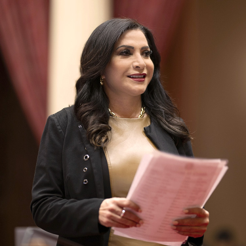
Senator Susan Rubio authored SB 273 The Phoenix Act, to extend the statute of limitations for prosecuting “criminal infliction of corporal injury resulting in a traumatic condition” to five years to allow for healing from trauma, ensured victim interviews were separate from alleged perpetrators, improved training and include victims and rehabilitated perpetrators as trainers.
In 2020, Senator Rubio authored SB 1141 which defined and brought coercive control into statute under “disturbing the peace.” This gave a rebuttable presumption that an award of child custody to a party who engaged in coercive control was detrimental to the best interests of the child. The next year she authored SB 538 to allow victims to safely file for domestic restraining orders electronically.
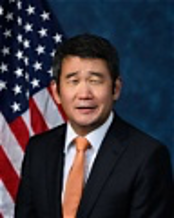
Senator Dave Min who later became a Congressman authored a hard fought bill SB 654. Sponsored by the Legislative Coalition to Prevent Child Abuse, the initially lowered the age from 14 to 12 for youth who requested to speak directly the judge, rather than having their wishes for custody distorted by adults who provided hearsay information to the judge.
Unbeknownst to us, the Los Angeles judges had been ordering youth to testify in open court in front of their parents about their preference for custody, rather than in the judge’s chambers with a court reporter present, as the rules of court recommended. This was utterly traumatizing for the children. We were so grateful to our allies at CA Partnership to End Domestic Violence (CPEDV) for alerting us to this travesty.
Senator Min, his staff member Annabell Hopkins and the Legislative Coalition pivoted to focus on protecting children from being forced to testify in front of their parents when they wanted to tell the judge their wishes. Thanks to a suggestion from our ally Family Violence Appellate Project, it also added a presumption against unsupervised visits to an abuser, requiring the court to write their reasons on the record if they ordered risky visits.
At the very last minute, the Judicial Council tried to sink the bill in the very last committee, after everyone else had enthusiastically endorsed it. They suddenly decided it would cost between $600,000 and $1,100,000 for a judge to write a few sentences on the record if he or she ordered a child into the unsupervised arms of an abuser..
It would have been comical, except it wasn’t. They deliberately missed the nuance that there would be no cost whatsoever if the court did the right thing by protecting the child, since there would be no need for a written reason.
The bill was supported by actress Angelina Jolie, whose own custody case made her advocacy for children quite personal. Kathleen also enlisted the help of Dylan Farrow who also tweeted about the bill. The HBO mini-series Allen v Farrow premiered on February 21.
The documentary revealed new details about her father Woody Allen molesting her and romancing actress and protective mother Mia Farrow’s other teenaged daughter, and how Mia Farrow successfully managed to protect Dylan in family court despite unethical psychologists from Yale Child Sexual Abuse Clinic at Yale-New Haven Hospital. Mia Farrow must have thought she had dropped right into the psychological horror movie Rosemary’s Baby that she starred in years before, when she stepped into family court.

We knew things would go better in the future when Senator Susan Rubio, sister of Assemblywoman Blanca Rubio, became chair of the new Senate Select Committee on Domestic Violence, and Senator Min joined.
In September, Kathleen Russell designed a special follow up series with panelists, including Viola Vaughan Eden, Joy Silberg, and Lundy Bancroft.) SB 654 was signed into law on October 9, 2021 by Governor Newsom. At the same time, AB 887 (Levine) became law to allow electronically filed restraining orders.
The Judicial Council countered with an Omnibus bill. They wanted monetary sanctions if a parent showed an evaluator report to anyone. That was a non-starter, but some of the other ideas made sense, with specific amendments. They dropped the whole thing when we made counter-counter suggestions that would protect children.
Assemblywoman Wendy Carrillo considered a bill to require electronic recording of hearings when there were no court reporters available but dropped the idea three days later. Fourteen previous attempts at mandating electronic recording for courts in California, beginning in the 1980s had failed. No wonder we were so far behind in protecting citizens.
The long-awaited Bureau of State Audits report on the California Commission on Judicial Performance had been issued back in 2016. It was scathing, in a dry, bureaucratic sort of way. Titled Weaknesses in Its Oversight Have Created Opportunities for Judicial Misconduct to Persist, it clearly stood in the gap and oversaw the judicial overseers, finding them to be significantly deficient. It made three main points about the CJP’s failures to protect the public or hold judges accountable:
- It does not consistently take all reasonable steps when it investigates alleged misconduct.
- Its structure and disciplinary processes do not align with best practices.
- It has not worked sufficiently to increase its transparency and accessibility.
The Legislature followed up on the audit report on the failures of the Commission on Judicial Performance with Committee bill AB 1577 in 2021 to right the wrongs after the completely unnecessary drama of the Commission suing the Bureau of State Audits. The arc of the moral universe was certainly long.
Kathleen, who had championed this reform, was doggedly persistent and would not rest until we, the people, won. The Center for Judicial Excellence was focused on good governance, and her vision was a functional ethical Commission on Judicial Performance.
The bill required the Commission to do its job, to “take all reasonable steps to determine the existence or extent of alleged judicial misconduct in order to protect the public, enforce rigorous standards of judicial conduct, and maintain public confidence in the integrity and independence of the judicial system.” It passed.
Advocate Barry Goldstein joined Marivic Mabanag, Kathleen Russell and Mo Hannah on the board of Advocates for Child Empowerment and Safety (ACES) on August 14, 2021, and arranged for funding for a lobbyist to roll out the policies expressed in the Safe Child Act.
The domestic violence community was beginning to take on child domestic violence victim issues, and grants from the US Department of Health and Human Services provided funding to bring children into focus.
The research Protective Mothers, Endangered Children: Tracing System Failure for Children of Divorce and Separation by Geraldine Stahly PhD, Connie Valentine and Veronica York was published in the Family and Intimate Violence Quarterly Civic Research Institute in Fall 2021. It showed that California mothers attempting to protect their children by reporting child abuse and domestic violence to family court lost custody to abusers more often than mothers in other states (85% versus 75%). Twice as many California mediators ignored evidence of abuse and more California children reported being re-abused (73% versus 60.7%). Cases went wrong often when a battered mother asked the court to protect her child from sexual abuse.
A 2021 study Production and distribution of child sexual abuse materials by parental figures showed that:
- 90% of child pornographers are males.
- 84% of victims are girls.
- 58% of perpetrators are fathers.
- 41% of perpetrators are stepfathers.
Sexual abuse, especially by fathers and stepfathers, is difficult to prevent but the use of child pornography is potent proof in prosecution. Each photograph is a picture of a crime scene. Internet Crimes Against Children (ICAC) teams need to be involved whenever there are allegations of child pornography. It would give the case a federal focus, since internet images cross state lines. This was rarely if ever done in these cases we were seeing.
As president of Advocates for Child Empowerment and Safety (ACES) and former Executive Director of the California Partnership to End Domestic Violence (CPEDV), Marivic spoke on November 30 on the topic of domestic violence and child abuse at the Senate Select Committee on Domestic Violence, chaired by Senator Susan Rubio.
It mirrored the Assembly Select Committee on Domestic Violence, chaired by Assemblywoman Blanca Rubio, who introduced AB 2279 to implement a custody disposition survey on February 16, 2022.
Two weeks later, on February 28, 2022, three young girls were murdered by their violent father in an unsafe supervised visit situation at a church not far from the State Capitol. David Mora Rojas shot 9-year-old Samarah, 10-year-old Samantha and 13-year-old Samia, along with the church member who was supervising the visit, then killed himself.
Their mother had a restraining order because he had choked and threatened to kill her, but she was nevertheless ordered to share custody. The grisly child homicide data suddenly became vivid and personal to Legislators.

Events suddenly galvanized, moving along at a rapid, dizzying clip, one tumbling over the next. By March 1, Congressman Brian Fitzpatrick’s federal bill was incorporated into the VAWA reauthorization, thanks to Joan Meier, Kathleen Russell and Camille Cooper.
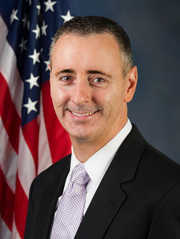
On March 16, 2022 President Biden signed the VAWA reauthorization which included Title XV Keeping Children Safe from Family Violence. Section 1504, known as Kayden’s law, to financially incentivize states to pass laws to require court training, utilize experts with expertise, and limit reunification.
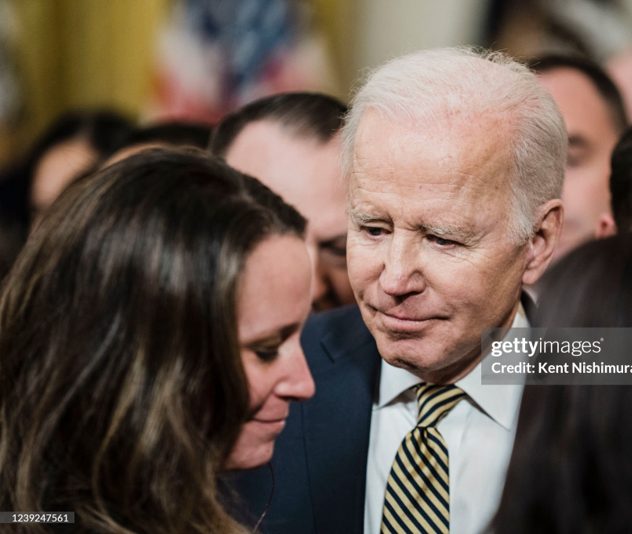
Angelina Jolie, Jane Stover, Joan Meier and Kathleen Russell were at the VAWA signing. The Executive Director of National Coalition Against Domestic Violence (NCADV) Ruth Glenn introduced President Biden, who had supported VAWA 30 years before.
He said he was taught by a kind father who abhorred anyone who raised a hand against a woman or child. What a proud moment for him, and a culture shift, a light in the darkness.