“If men were angels, no government would be necessary.”
James Madison
The opposition was busy. The National Council for Children’s Rights was founded in late 1984 and renamed the Children’s Rights Council (CRC). Co-founded by David Levy, it was hailed as a children’s advocacy group in divorce situations and focused on shared parenting and alternative dispute resolution, with a brief nod to child abuse prevention. It was, in fact, a cleverly named father’s rights group. Levy also founded the Children’s Rights Fund for Maryland to help parents (fathers) with funding for attorneys.
The attempt to distort our perceptions of reality by saying abuse never happened was mind-warping. George Orwell’s dystopian novel Nineteen-Eighty-Four was well on its way to reality, even though at that time there were no thought police and Big Brother lurking. However, there were whiffs of totalitarianism and repression in the rapidly moving imprisonment of children in fascist-type homes of batterers.
Would cruel parenting lead to a wide-spread inclination toward authoritarianism?
During that time, improvements were being made in the field of trauma, as therapists tried to attend to the shattered lives of adult war veterans and trauma victims. Dissociation was studied. People who were traumatized often detached from reality for self-protection. In 1984, the International Society for the Study of Multiple Personality and Dissociation was formed, which became the International Society for the Study of Dissociation, and finally the International Society for the Study of Trauma and Dissociation.
In 1984 Attorney Richard Ducote began his nationwide focus on complex child custody cases involving domestic violence and child abuse. He became a champion for children. As he succinctly put it in one presentation, “Family courts ignore evidence that would convict a pedophile in criminal court.”
Family Violence and Sexual Assault institute (FVSAI), later renamed the Institute on Violence, Abuse and Trauma, was also established in 1984 in Texas by Robert Geffner PhD, to disseminate current research and trauma care information, and encourage research on treatment approaches.” FVSAI later moved to San Diego and became an important meeting place for advocates.

The International Society for Traumatic Stress Studies (ISTSS) was developed in 1985 also, to study trauma and especially dissociation.
In her 1984 book Thou Shalt Not Be Aware, psychologist Alice Miller wrote, “The truth about our childhood is stored up in our body, and although we can repress it, we can never alter it. Our intellect can be deceived, our feelings manipulated, our perceptions confused, and our body tricked with medication. But someday the body will present its bill, for it is as incorruptible as a child who, still whole in spirit, will accept no compromises or excuses, and it will not stop tormenting us until we stop evading the truth.”
In 1985, the California Domestic Violence Program was created. Federal funds were administered by the Governor’s Office of Criminal Justice Planning, and later by the Office of Emergency Services.
That year, Huntsville, Alabama’s District Attorney Robert Cramer developed the first Children’s Advocacy Center to coordinate the various agencies responding to child abuse. It soon became the model for interviewing children, using a trained forensic interviewer who was observed by multidisciplinary teams. It was a big leap forward.
These multidisciplinary forensic interview centers helped, especially because the interviews were videotaped and the children only had to be interviewed once. They were focused on criminal courts, quite different from civil courts.
Juries need to be very certain before convicting a person in criminal court, “beyond a reasonable doubt.” Some could argue that reasonable means greatly above 80% and others could say juries need to be 95% or more certain the person is guilty before convicting.
Either way, it is far beyond the civil burden of proof of “preponderance of the evidence“ which is just over 50% certainty in civil matters.
There was something deeply wrong going on. Why did family courts seem to use the highest standard of proof before protecting children?
In 1986, Congress passed the Child Abuse Victim’s Rights Act which extended the Racketeer Influenced and Corrupt Organizations (RICO) statute to cover the sexual exploitation of children.
Also in 1986, author/therapist Phyllis Chesler published Mothers on Trial: The Battle for Children and Custody. She had conducted a small pioneering study that began in 1977 and described the custody situation in detail. She co-organized a speak out about mothers losing custody of children at the John Jay College of Criminal Justice in New York and a congressional press briefing in Washington, D.C., on mothers and child custody.
That year, New York sociologist Amy Neustein PhD lost her child to a sexual abuser.
Randy Burton, the former chief prosecutor of the Family Offenses Section of the Harris County District Attorney’s office, founded Justice For Children in Houston, Texas in 1987.
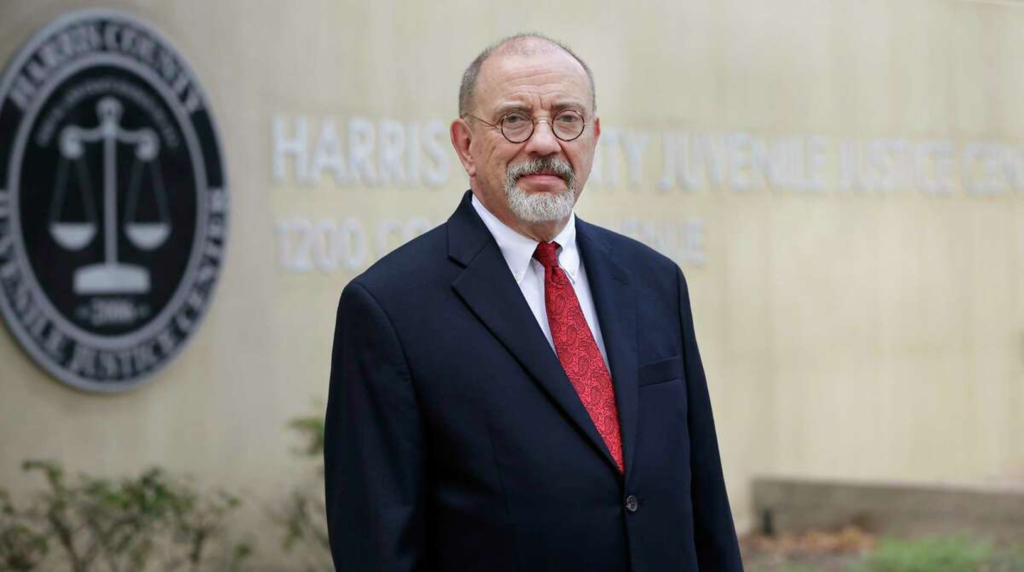
He initially joined citizens together to focus on the failure of the child welfare system to protect abused children, and soon found the problem was just as bad in family court. HIs successful model was an attorney paired with a counselor/social worker to help non-offending parents and children in these terrible cases.
“Atlanta belle” Faye Yager began hiding mothers and their abused children in 1987. Her daughter had been placed with her father Roger Lee Jone, despite sexual abuse allegations. In 1987 he was indicted on 9 counts of child molestation involving three children in Florida. That was when Faye began her underground crusade. She was a coal miner’s daughter and former interior designer who became a type of modern-day vigilante.
She thought some in the system professionals including judges were involved in satanism. She was arrested, charged with kidnapping, acquitted and sued by a wealthy father after helping thousands of families. A docuseries Children of the Underground was made on her life and work. Faye Yager became a legend in her own time.
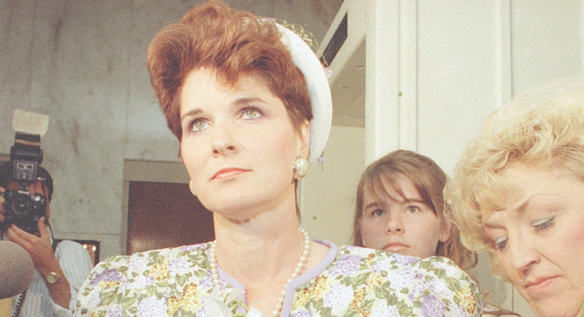
The lack of internet in those early days was a blessing and a curse. It was easier for abused mothers and their abused children to hide, but it was also not easy to find resources.
That year, 1987 Dr. Elizabeth Morgan, a graduate of Harvard University and Yale Medical School, was imprisoned in Washington DC for refusing to disclose the location of her daughter who was ordered to visit with her father whom she reported for sexual abuse. The next year, Dr. Morgan published a book titled Custody: A True Story on trying to protect her daughter.
The Friends of Elizabeth Morgan was formed and in 1988, Congress passed a law limiting incarceration. Dr. Morgan was freed.
- The group became Alliance for the Rights of Children (ARCH) led by Glinnie Rohelier and began collecting data on family court disasters.
- ARCH helped found American Coalition for Abuse Awareness (ACAA) in 1993, led by attorney Sherry Quirk, to work on federal legislation. ACAA then merged with the non-profit One Voice four years later.
- One Voice/ACAA merged with Texas-based Justice for Children four years after that.
- Congress passed the Elizabeth Morgan Act in 1996 to allow Dr. Morgan’s now teenaged daughter to decide whether she wanted to see her father.
- Reversed on appeal because it applied only to one case, it had effectively protected that one child, who by then was an adult, and safe.
A group called Believe the Children was founded in 1988 around a kitchen table in California, where parents from different states came together to talk about their young children’s terrifying accounts of ritual abuse. Beth Vargo from the Illinois chapter began publishing a newsletter on ritual abuse of children in 1988. Receiving that hardcopy newsletter was a lifeline for those of us struggling with incomprehensible and unspeakable realities. They held their first conference in 1993. Sadly, the group disbanded four years later, but not before Beth told me about California family law attorney Seth Goldstein, a former law enforcement officer who founded the Child Abuse Forensic Institute and published the Sexual Exploitation of Children: A Practical Guide to Assessment, Investigation, and Intervention.