“If we could somehow end child abuse and neglect, the eight hundred pages of the DSM would be shrunk to a pamphlet in two generations.”
John Briere PhD
The landmark groundbreaking Adverse Childhood Experiences study from the Centers for Disease Control and Prevention was published in 1997. Drs. Vincent Felitti of Kaiser Permanente and Robert Anda had met at a conference where Dr. Felitti was presenting the outcome of his 1985 research on obesity and the connection with early sexual abuse teamed up to create research that was both shattering and validating.


The ACE study of over 17,000 adult Kaiser patients, 75% of whom were white with at least some college education, showed that the more types of childhood adversity, the higher the likelihood of adult behavioral, mental and physical disorders. It showed a high rate of trauma among ordinary middle-class Americans. The rates of abuse were as follows:
| 28.3% | Were physically abused (27% women, 29.9% men) |
| 26.9% | Grew up with a family member who was a substance abuser (29.5% women, 23.8% men) |
| 23.3% | Grew up with parents who separated or divorced (24.5% women, 21.8%) |
| 20.7% | Were sexually abused (24.7% women, 16% men) |
| 19.4% | Grew up with a family member who had mental illness (23.3% women, 14.8% men) |
| 14.8% | Were emotionally neglected (16.7% women, 12.4% men) |
| 12.7% | Grew up with a mother who was treated violently (13.7% women, 12.4% men) |
| 10.6% | Were emotionally abused (13.1% women, 7.6% men) |
| 9.9% | Were physically neglected (9.2% women, 10.7% men) |
| 4.7% | Grew up with a family member who was incarcerated (5.2% women, 4.1% men) |
Over half of participants had at least one ACE. 36.1% had no adverse childhood experiences. There was a strong graded relationship between the number of categories and a measurable increase in adult physical, mental and behavioral disorders. Severity and frequency of adverse experiences were not measured.
What had happened in childhood led to negative outcomes in adulthood, including heart disease, cancer, fractures, diabetes, obesity, unintended pregnancy, smoking, alcoholism, depression, anxiety. Occupational health also worsened progressively as the ACE scores increased.
Adults with 4 ACES differ dramatically from adults with no ACES
| 240% increase | in the prevalence of hepatitis. |
| 250% increase | in sexually transmitted diseases. |
| 260% | more likely to have COPD. |
| 460% | more likely to be suffering from depression. |
| 1,220% increase | in attempted suicide (a 30 to 51-fold increase). |
A male child with an ACE score of 6 has a stunning 4,600% increase in the likelihood of later becoming an intravenous drug user when compared to a male child with an ACE Score of 0. The implications are clear for the “war on drugs.” We are fighting the wrong enemy. The battle needs to focus instead on ending child abuse and neglect, and healing survivors.
A male child with an ACE score of 6 has a stunning 4,600% increase in the likelihood of later becoming an intravenous drug user when compared to a male child with an ACE Score of 0. The implications are clear for the “war on drugs.” We are fighting the wrong enemy. The battle needs to focus instead on ending child abuse and neglect, and healing survivors.
Symptoms that labeled “mental illness” such as depression and anxiety are often natural reactions to trauma. But what about brain changes?
Diagnosed patients show differences in brain structure from normal controls, say mental illness proponents. However, Post-Traumatic Stress Disorder (PTSD) and trauma can lead to brain damage, especially atrophy of the hippocampus which stores and retrieves memory. The floods of fear chemicals during trauma create damage.
As for schizophrenia, research is showing what enlightened treating clinicians have known, that psychotherapy can be effective. One doctor said that the people he treated who had been diagnosed with schizophrenia were very often survivors of ritual abuse.
The term “mental injury” is a far better description. Dr. Nabil Kotbi changed Darrell Hammond’s life after the comedian suffered many misdiagnoses, by explaining he had been mentally injured by severe childhood trauma. Hammond was able to heal after getting the right diagnosis and being treated for trauma.
Dr. Nabil Kotbi changed Darrell Hammond’s life after the comedian suffered many misdiagnoses, by explaining he had been mentally injured by severe childhood trauma.
Are most diagnoses in the Diagnostic and Statistical Manual of Mental Disorders (DSM) effectively describing symptoms of previous trauma, not diseases? Would the DSM really “shrink to the size of a pamphlet in two generations if child abuse ended today,” as psychologist John Briere so famously put it?
Clearly ahead of his time, Dr. Briere believed it. He developed the professional Trauma Symptom Inventory in 1995 with 10 scales, connecting results of trauma in a list of common and usually pathologized emotional outcomes: anxious arousal, depression, anger/irritability, intrusive experiences, defensive avoidance, dissociation, sexual concerns, dysfunctional sexual behavior, impaired self-reference, and tension reduction behavior.
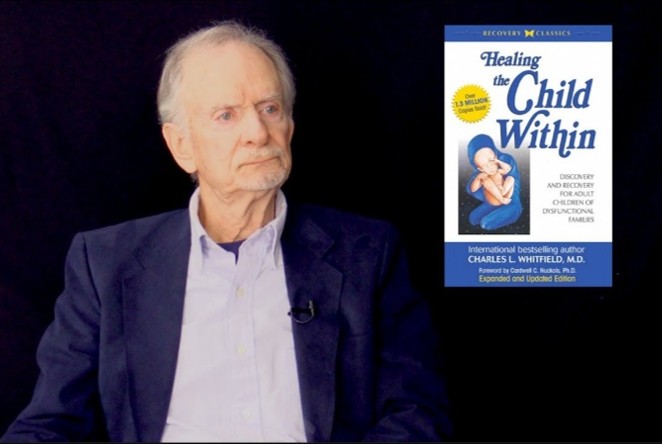
Charles L. Whitfield MD concurred. His method was to help his patients become abstinent from alcohol and drugs, then work on healing the underlying trauma that created the urge to abuse substances. A prolific writer, he offered a succinct comment on the resistance to connecting early trauma to amnesia, in his Traumatic amnesia: The evolution of our understanding from a clinical and legal perspective.
“While some accused and convicted child molesters have inappropriately influenced the media, the public, and many in the clinical and legal professions by claiming that traumatic amnesia does not occur in child sexual abuse, workers in the field of trauma psychology have accumulated solid empirical evidence over the past 100 years that it does occur and is common.”
Accused perpetrators would have something to hide when the amnesia dissipates in their victims, and the criminal acts of child abuse come to the surface like cities buried under water by dams appear during drought.
Re-labeling normal trauma reactions (such as depression or anxiety or even schizophrenia) as “illnesses” and “brain diseases” neatly takes the focus off the crimes that created the mental injuries in the first place. The medical industry made a fortune by re-addicting recovering street drug abusers and alcoholics to physician-prescribed drugs. Recovering substance abusers with symptoms of underlying trauma are prescribed drugs for these non-diseases, thus medically creating “dual diagnosed” patients.

Medicated clients who saw public mental health psychiatrists often got steadily worse over time. They would be prescribed more and more drugs, since addictions need to be fed more and more to gain the same effect, as all addicts know. The same clients who saw skilled trauma therapists got better in a year or two and eventually could wean off prescribed drugs entirely.
In the late 1990’s, specialized domestic violence courts began to appear. It was a hopeful concept, to coordinate cases in different courts in order to bring increased victim safety and better batterer accountability. But there were huge gaps in the new system that sounded like the gaps in the old system.
It was a poorly-implemented good idea. Judges lacked training. They quickly burned out. Screening and coordination were not standard. Prosecutors tended toward assembly-line justice. Agencies worked at cross purposes. Batterers had ineffective treatment and slipped through the cracks. Victims still weren’t safe. Worse yet, public trust dropped when mothers seeking relief had their children removed by juvenile dependency court. Word got around and battered mothers stopped asking for help.
All doors had tigers behind them.

Congress passed the Adoption and Safe Families Act of 1997 (ASFA), later renamed Promoting Safe and Stable Families Program (PSSF). The Act shifted focus from reunification of foster children with abusive families to “expeditious permanency” through adoption. Things had not worked out well trying to keep families together and fix them. At the same time, it attempted to prevent unneeded separation of children from their families, yet leaning toward child safety and health.
Time-limits were established on family reunification for foster children with their birth families to ensure permanency by reuniting them or finding a family for adoption. This helped correct the problems from back in 1980 which had led to children being left or placed back in unsafe family homes, or floating around in unsafe foster homes. Money followed. ASFA was considered a “fundamental change” to child welfare emphasis,
Meanwhile, pedophile-protector physician Richard A. Gardner MD self-published The Parental Alienation Syndrome: A Guide for Mental Health and Legal Professionals Children’s disclosures of incest were flipped upside down by blaming the mother for alienating the child from the father. It was the perfect weapon for the opposition.
Children’s disclosures of incest were flipped upside down by blaming the mother for alienating the child from the father. It was the perfect weapon for the opposition.
In 1997, Law Professor John Myers wrote A Mothers Nightmare: Incest: A Practical Legal Guide for Parents and Professionals and an article titled What is Parental Alienation Syndrome And Why Is It So Often Used Against Mothers?