“There are no words to express the abyss between isolation and having one ally. It may be conceded to the mathematician that four is twice two. But two is not twice one; two is two thousand times one.”
G. K. Chesterton
On December 18, 2002, the San Francisco Weekly published Girl Interrupted by Bernice Young about Alanna Krause’s lawsuit against her father Marshall Krause, a prominent civil liberties attorney in Marin County, her attorney Sandra Acevedo and the family therapist Lana Clark, whom Alanna described as her father’s lover. Evaluator Ed Oklan had diagnosed her mother with the junk science “Parental Alienation Syndrome” and recommended custody to her father, who was physically abusive to her.
Other labels began popping up to denigrate mothers trying to protect their children from abusers, such as “gatekeeper,” “coaching” and our all-time favorite, “Malicious Mother Syndrome.” Karen launched an energetic campaign to have “Fornicating Father Syndrome” become a Thing. It got some traction for a while amid the fathers’ rights hate group circles. They were incensed at our cheekiness. Karen wrote an outstanding article for the February 2003 CAADV newsletter.
Other labels began popping up to denigrate mothers trying to protect their children from abusers, such as “gatekeeper,” “coaching” and our all-time favorite, “Malicious Mother Syndrome.” Karen launched an energetic campaign to have “Fornicating Father Syndrome” become a Thing.
In March 2003, Lundy Bancroft and Geraldine Stahly addressed our California state legislators about the courts consistent failure to protect children in custody disputes and the high overlap of battering and incest. By then, the Stahly study had 67 national respondents. The preliminary data showed most mothers were domestic violence victims and had primary custody when their cases began.
- Three-quarters asked the court to protect their children from sexual abuse.
- Two-thirds brought child physical abuse to the court’s attention.
- Only 3% of the fathers were placed on supervised visits.
- Three-quarters of the children reported being re-abused.
I wrote an article for the Davis Enterprise on March 31, 2002, with the title “Our childhood trauma may be at the root of many disorders.” It highlighted the research on schizophrenia and child trauma by John Read, Ph.D., a clinical psychologist at University of Auckland in New Zealand who later became professor of clinical psychology at Swinburne University in Melbourne Australia and author of Models of Madness: Psychological, Social and Biological Approaches to Schizophrenia” (Routledge, 2004) and Bruce Perry, M.D., researcher, clinician, teacher and later author of What Happened To You? Conversations on Trauma, Resilience and Healing .
The article likely cemented my adversarial role with our local Yolo County Mental Health. They were deep into the medical model, believing that drugging clients into a stupor and labeling them schizophrenic was best, rather than asking about childhood trauma.
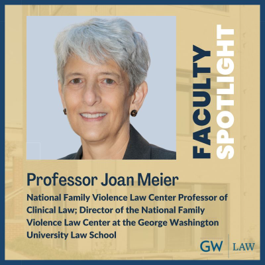
Unbeknownst to us, in 2003 the Domestic Violence Legal Appellate Project (DV LEAP) was being established in Washington DC by George Washington University law professor Joan Meier. She had cracked the code, realizing that most battered mothers ran out of money long before they could appeal. Without an attorney, there was no chance of success.
DV LEAP was created “to provide expert appellate litigation to reverse unjust trial court rulings and protect the rights of women and children victimized by family courts.” We had no idea how large and beneficial a role Joan Meier would play in our lives. Joyanna Silberg Ph.D. and her team from Leadership Council researched “turn around” cases in which bad outcomes were changed after the cases were appealed.
Appeals actually did help turn cases around. Appeals could reverse decisions and make case law. The downside was that appeals and writs were very expensive and took time. Some judges refused to make final orders which effectively blocked the process. Most mothers had no money, no attorney, often no transcript from their cases, and no more energy left. The appellate process was usually ineffective in family law cases.
The National Center for Prosecution of Child Abuse 2003 newsletter had a two part series titled “Parental Alienation Syndrome: What Professionals Need to Know.” Unfortunately, family court professionals seemed to think that PAS was the best thing since sliced bread and no article would change their tightly-shut collective minds.
The concept of “parental alienation” may have originally arisen from the old-fashioned common law tort “alienation of affections” in which a spouse, usually a husband, could sue his adulterous wife’s lover for damaging the marriage. The lover was to blame. The wife was treated as having no say in the affair, as she is still considered property in the mind of an abusive husband. This concept does a neat end run around the husband’s own behavior. The concept skillfully diverts the focus from any responsibility the husband might have had for a failed marriage and has been abolished in most of the country.

This was an antiquated notion and in 2014, North Carolina Forsyth County Superior Court Judge John Craig III put it to bed with his clipped decision, “(The court) dismissed Angela Rockroth’s alienation of affection claim, ruling that it was no longer a valid action …. that it was an obsolete relic of a bygone day – one which violated constitutional rights.”
It did not matter to those accused of child sex abuse. They seized upon this winning idea of using alienation to deftly divert the blame from accused to accuser. This was the child version of alienation of affection. A mother somehow brainwashes the child to say terrible things to alienate the child from a perfectly fine father. How does a mother combat such logic-defying nonsense? It was truly Alice in Wonderland.
The strategy not only keeps abusers out of jail, but hands over their victims and even has the mothers pay child support to them to abuse their victim children. We called it child abuse support. As an added satisfaction for abusers, sometimes the mother ends up in jail for trying to escape with the child. Living with the abuser silences the children, thereby creating safety for offenders. Law enforcement is not able to effectively prosecute a case if the victim witness is muzzled.
In California, two important updates were made to the Government Code.
- The first was in Government Code 13956(b) that an application for a claim to the Victims of Crime Fund based on domestic violence could not be denied on the basis that the victim had not made a police report. This fund was crucial for therapy for victims.
- The second was in Government Code 13955(f)(1) that “a child who resides in a home where a crime or crimes of domestic violence have occurred may be presumed by the board to have sustained physical injury regardless of whether the child has witnessed the crime.”
“…. a child who resides in a home where a crime or crimes of domestic violence have occurred may be presumed by the (Victims of Crime) board to have sustained physical injury regardless of whether the child has witnessed the crime.”
That year, a new study by John Briere Ph.D. and Diana Elliott titled Prevalence and psychological sequelae of self-reported childhood physical and sexual abuse in a general population sample of men and women found that 32% of women reported having been sexually abused as children. This was even higher than the ACE study showed.
It was everywhere. Why was no one talking about it?
The Davis Enterprise ran a story in February 2003 about Winny, a slave woman who sued her owners in 1819 in Missouri, arguing that she and her children should be free. She won. “Winny v. Whitesides set the standard for determining freedom cases up until the 1850s.”
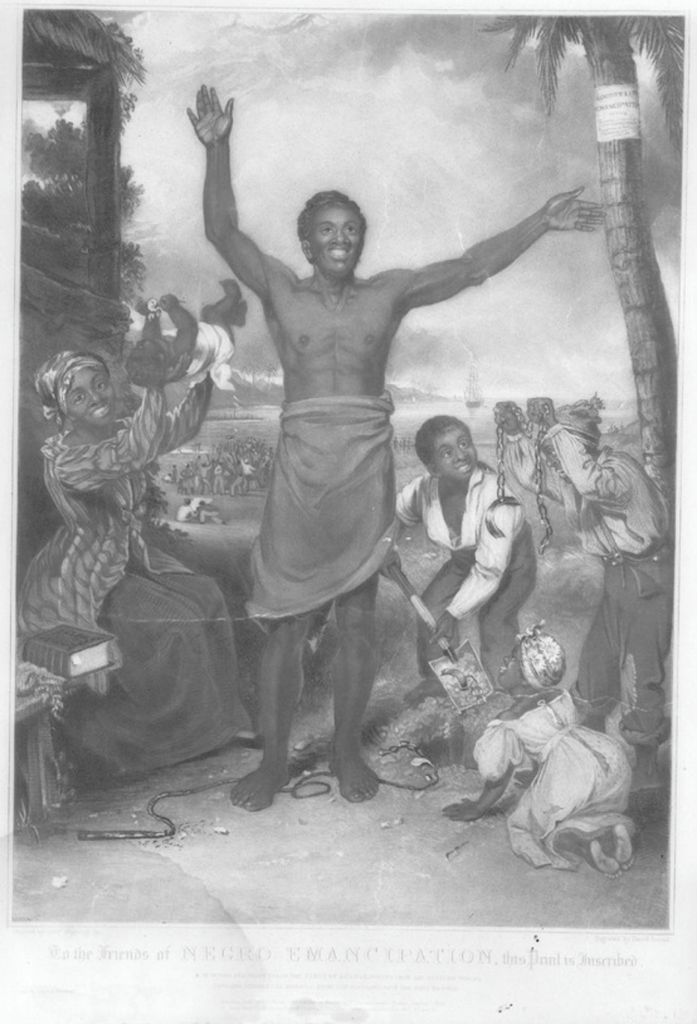
The big question remained. Are children citizens, human beings with constitutional rights to life and liberty from a person they report for a violent or sexual crime? Or are they considered property, like enslaved people in the United States before 1863?
Our Ninth Annual Child Sexual Abuse Awareness Conference on April 12, 2003, was titled “Which Court Best Protects Sexually Abused Children? The Answer May Surprise You.” We gave awards to Cameron Handley from our District Attorney’s office who had developed and directed the stellar Yolo County Multi-Disciplinary Interview Center.
This came to pass after we invited all the agencies dealing with children to a workshop years before. We also honored Kristen Lombardi for her expose of the pedophile priests and family court scandals in her Boston Phoenix articles.
Attorney Meera Fox, whose organization Child Abuse Solutions, Inc. was a Judicial Council approved provider of evaluator and attorney training, put on a three-day concurrent training on April 11-13. Our speakers trained evaluators in the morning and presented at the conference in the afternoon, which was complicated but very rewarding.
FVSAI sponsored continuing education units. Geraldine Stahly presented the research to the 150 audience members Attorneys Keith Perkins from the Never Again Foundation, Richard Ducote and Seth Goldstein discussed suing abusers and their court cronies.
Richard Ducote later won a multi-million lawsuit against formerly abused child Alanna Krause’s father, and her therapist who was sleeping with her father. He kindly offered to litigate a class action case for injunctive relief. I had to look up injunctive relief. It meant making courts start or stop doing something if we won, but there would be no money settlement. Sadly, we didn’t have enough to cover the cost of discovery. Civil lawsuits helped after the fact. If there were enough of them, they might prevent the custody train wreck. But that door was closed to us for the moment.