“Just as it is impossible to explain childbirth to a woman who has never given birth, it is impossible to explain child loss to a person who has never lost a child.”
Lynda Cheldelin Fell
We soon moved our prayer time to 9:00 pm and prayed diligently by phone every night.
This was patterned after the Silent Minute, begun by British Major Wellesley Tudor Pole in 1940 during WWII. He received, “an inner request from a high spiritual source that there be a Silent Minute of Prayer for Freedom, at 9 pm each evening during the striking of Big Ben. If enough people joined in this gesture of dedicated intent, the tide would turn, and the invasion of England would be diverted.” The tide turned. England was not invaded.

“An anecdote emphasizes the profound power of the group meditation of the Silent Minute. In 1945 a British intelligence officer was interrogating a high Nazi official. He asked him why he thought Germany lost the war. His reply was, “During the war, you had a secret weapon for which we could find no counter measure, which we did not understand, but it was very powerful. It was associated with the striking of the Big Ben each evening. I believe you called it the ‘Silent Minute.”
Right after we started to pray in the park, I met Josie Cohen, a protective mother who had many unscrupulous Sacramento professionals on her case. She, her mother Jean Travis and her fiancé Ray Huckins had been working hard to save her little boy from sex abuse.
A small Sacramento group led by The Friends of Josie Cohen had spent two years researching court records after Sacramento Judge Peter McBrien forced her toddler into unsupervised visits with his documented pedophile father, despite the child’s consistent disclosures of rape and multiple substantiations of child sex abuse by child welfare services investigators.
They filed a formal citizen’s complaint with the Sacramento Grand Jury, citing a dangerous lack of coordination among police, sheriff, child welfare services, family court services, court-appointed evaluators and judges that resulted in children being disbelieved and given to accused perpetrators. The 1996 Grand Jury report substantiated their complaint. They recommended moving child sexual abuse out of family court.
The 1996 Grand Jury report substantiated (the citizen’s) complaint. They recommended moving child sexual abuse out of family court.
Nothing happened.
We were unknowingly becoming a social justice movement. More victims of this disturbing situation began to find each other through conferences and referrals. Although some of the mothers were so overwhelmed by grief that they were not able to take action, Karen Anderson found the way for her to heal was to stand up against the wickedness. Her two little girls and their older brother had been placed with their identified child sex abuser.
Karen and I made a good team. She, like most of the mothers, was attractive, intelligent and assertive. She knew no fear and had been a dog trainer in her previous life. I was a timid bureaucratic analyst and former counselor. We both loved horses and dogs. We began planning.
“We’ve got to figure out what on earth is going on and what to do about it.”
“What are the three branches of government again? I forget. Civics wasn’t my strongest class.”
On January 19, 1997, ten or twelve of us, including Karen, Josie, her fiancé Ray and her mother Jean Travis, along with other mothers, met at the Coffee Tree restaurant in Vacaville.

We started getting together regularly, sometimes literally around my kitchen table. Some of the mothers were themselves victims of domestic beatings and rapes. They had tried to leave their abusers to protect their children from the same treatment and became ensnared in the family court web.
We started reading up on this strange situation and found some hair-raising articles. This was before the internet had caught on. The articles were all hard copy, carefully copied and mailed. Some were about the underground.
When the court prohibited mothers from protecting their children, some fled and tried to hide. They were hunted down like dogs by federal law enforcement and imprisoned. Their children were cruelly removed and given to their abusers, often cut off completely from their safe mothers. The children then lived in terror with no solace.
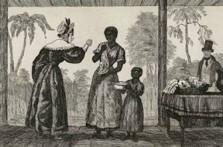
It was so bizarre. So abhorrent. We found a few parallels. During slavery, fleeing black enslaved people were hunted like animals, recaptured and punished viciously. Family units were destroyed, children sold away from their parents, couples sold away from each other, children torn from mothers, men raped and beaten into submission.
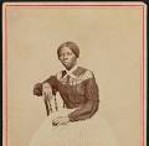
It was designed to break their spirit so they would become docile and lose hope. The slave holders, including the slave-holding women, did not want slaves to even consider getting “uppity.” One incredibly courageous enslaved woman, Harriet Tubman, led at least 70 of her people north to freedom.
After being decimated by war and disease, Native American and Canadian children were forced to assimilate to the victor’s way of life by being placed in abusive, often deadly government-run boarding schools. During the unspeakable Holocaust, fleeing Jews were hunted, tortured and killed by the millions. To keep people who are considered subordinate in line, punishment must be harsh and swift.
But the families we were seeing didn’t exactly fit the analogy. We were mystified.
“Why is this happening to kids from well-off white families? How could they get an entire system, with so many different organizations and agencies, to go along with this crazy scheme? And where were the good people who believed that children should be safe?”
As we were living this inconceivable, incomprehensible situation, we were stunned to find that other professionals and mothers in California and other parts of the country had already been documenting it. We managed to find many of them over time, bit by bit. We didn’t realize we had been trying to reinvent the wheel. We also didn’t realize our wily opponents were way, way ahead of us.
A little historical background is needed. Well, maybe a lot. I had been blissfully unaware of most of these ancient and recent social dynamics, although was vaguely that women had organized, lobbied, and suffered for the simple, profound act of voting. My own mother was born before women could vote.
Please feel free to skim these next chapters if you paid better attention in history class than I did. And don’t expect to remember all these details. They are here mostly for historical reference and to honor those who went before us.
Women and children have been legally and economically at the mercy of men until very recently, and continue to be so, in different ways. Women are usually smaller and lack the muscle mass of dominant males who then made the best of the physical situation by codifying women’s subordinate position just in case they tried to get uppity. Under ancient Roman Laws of Chastisement, a man had the right to beat his wife with a rod the width of the base of his right thumb.
Roman men’s power over their wives and children was absolute, as they could sell them into slavery, abuse them, or kill them at will.
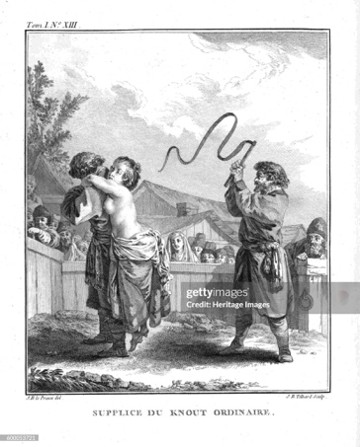
The medieval Church was unremittingly patriarchal, although at times urged men to have mercy on their wives. Under English common law, the doctrine of couverture essentially obliterated a married woman’s existence. Husband and wife became a single person. They became him. A wife could not own property, enter into a contract, or keep her salary for herself. Prior to the mid-1800s, beating one’s wife was also a valid exercise of a husband’s authority under English common law. Only married women met the criteria.
In America, the position of women was similar, as American common law was fundamentally based on English common law. Because unmarried women were not regulated under couverture, this status did not technically meet the definition of slave, “a person who is the legal property of another and is forced to work for and obey them.”
In the History of Children’s Rights, Child USA wrote, “In the earliest days of the colonies, children were actually considered the property of their fathers. Many newcomers to the colonies were indentured servants (i.e. someone required to work for free to pay off travel and housing they are provided) and so were their children since they were considered property.”
“In the earliest days of the colonies, children were actually considered the property of their fathers.”