“We are captivated by the hollow stagecraft of political theater as we are ruthlessly stripped of power. It is smoke and mirrors, tricks and con games, and the purpose behind it is deception.”
Chris Hedges
We sent a letter to Elkins Family Law Task Force in October 2009, objecting to the use of mandatory case management, to no avail. Crimes were still treated as family issues to be managed, not investigated.
We had monthly phone meetings with CA NOW Family Court Reform Committee in Southern CA with Dr. Kathie Mathis, Jeff Belmont, Darby Mangus, Dian Black and Kathleen. At first having family law clinics for attorneys for low-income women was floated, but it would have been very expensive, so we decided to work on citizen court watch instead.
We did a presentation with Assemblyman Beall in Santa Clara, which Kathleen and Center for Judicial Excellence sponsored on October 29, 2009. It was called Family Court Crisis: A Closer Look at Problems and Solutions and showed the CJE award-winning documentary Family Court Crisis: Our Children at Risk.
I wrote to the National Institutes of Health and the World Health Organization to object to putting Parental Alienation Syndrome (PAS) in the Diagnostic and Statistical Manual. We tried to interest Maria Shriver, Governor Schwarzenegger’s wife, in the crisis.
Nothing improved.
The protective mothers’ profile of being attractive, intelligent and assertive, generally prayerful women, were qualities which courts seem to dislike intensely. They were helpful in a movement. That year, beautiful, smart, assured Tina Swithin began One Mom’s Battle.

She eventually won her family law case ten years later, without an attorney. Her former husband relinquished his parental rights. It was nothing short of miraculous.
On November 10, 2009, the Safe Child Coalition sent a letter to Elkins Family Law Task Force Chair Laurie Zelon to object strenuously to their recommendation of case management without stipulation by parents, which would result in further abuse of judicial power.
This was the diametric opposite of the stated goal of the Elkins case, which was to allow live witnesses in court, not just written testimony, so they could be sworn to tell the truth. Case management happens in juvenile court where there is no pretense of a trial with sworn-in witnesses. Social workers can say whatever they wish, without accountability. We were struggling to keep family court a court of law, rather a social work agency. It needed to be a court that determined if a child had been injured by a parent and would protect that child.
We were struggling to keep family court a court of law, rather a social work agency.
We recommended the following:
- Follow Family Code 2030(a) to assure both parents are represented when one has an attorney
- Disconnect child support from parenting time to reduce incentives for parents to seek custody to receive or avoid paying child support
- Videotape hearings, or ensure a record of all hearings in another manner
- Provide an independent effective complaint process for court employees and appointees
- Develop an ombudsman program using independent state-level administrative law judge panels (the expensive appellate process is out of reach of most parents)
- Develop an ongoing volunteer citizen review panel for cases of children placed at risk.
- Rotate family law judges every 2-4 years to reduce burnout and cronyism.
- Limit immunity for judges and appointees.
- When there are no allegations of domestic violence, child physical or sexual abuse, or substance abuse, parenting time should mirror pre-separation parenting time as closely as possible.
- Eliminate court alternative dispute resolution and mediation in cases when there is a power imbalance, such as domestic violence cases.
- If child welfare services (CWS) is involved, remind social workers they are required by the Welfare and Institutions Code to leave children with fit parents and remove children from abusive, unfit parents.
- When CWS is involved, a Court Appointed Special Advocate (CASA) volunteer from the DA office should be assigned to the child whose parents are in family court.
- When CWS substantiates child abuse or the family receives Victims of Crime funding for a crime, that must be sufficient for family court to place the child with the safe parent and have no contact or only supervised contact with the unfit parent, until the child freely wishes to see the accused parent and designs a way to be safe.
- When CWS does not substantiate child physical or sexual abuse or domestic violence, use a videotaped forensic interview by a multidisciplinary interview team.
- When there are allegations of domestic violence, child physical/sexual abuse or substance abuse, replace evaluators with well-trained court-employed investigators to:
- Gather all existing information from criminal records, law enforcement investigations, law enforcement and CWS investigations, Multi-disciplinary Interview Team (MDIT) interviews and related professional reports using the FC 3118 protocol to investigate cases.
- Use a standardized format to present only facts, not theories
- Conduct a standard risk assessment to predict likelihood of future lethality
- Have allegations of substance abuse investigated by certified substance abuse experts and provide random drug and alcohol testing. If the parent is a habitual/continual substance user per FC 3011, assume the child is not safe alone with that parent
- Provide only recommendations according to FC 3118
- Ensure that the parents are able to fact-check and stipulate to the report before it is submitted to the court
- If the report is not stipulated by the parents, it is presented to and read by the court only during an evidentiary hearing after the investigator and witnesses can be examined under oath.
- Use a proper Request for Proposal (RFP) contracting process for any private investigators or evaluators, only after the court has verified that no employees can be trained and qualified.
- Discourage expensive, intrusive psychological testing for victims.
- Have the court pay any private evaluator/investigator.
- Have the court pay any appointed minor’s attorneys directly.
- Give children civil and human rights to
- Testify directly to the judge if they wish.
- Receive notice of hearings that impact them.
- Fire a minor’s attorney who does not properly represent or advocate for the child or provide a standard duty of care.
- Design a parenting plan that meets their needs and provides for their safety.
- Be protected through no contact or supervised visits when children themselves report physical or sexual abuse, or there is evidence they were abused.
- When a child reports physical or sexual abuse to a mandated reporter, family court must err on the side of caution to protect the child.
- The court may not consider concepts such as alienation of affection when there is any evidence of domestic violence, child physical or sexual abuse or substance abuse.
- Avoid placing children with abusive parents.
- Use supervised visits only for violent or incestuous parents.
- Have judges make written findings on the record of evidence of domestic violence or child physical or sexual abuse or substance abuse.
- Collect data on cases in which children are ordered into custody or unsupervised visitation with their named sexual or physical abuser or a violent dominant aggressor.
On December 31, I wrote to the Chairman of the Assembly Judiciary Committee, and attached my March 2009 letter in opposition to AB 939, the bill to carry out the recommendations of the Elkins Family Law Task Force, because of the offending case management and services language.
Their stated goals were to “increase access to justice, ensure due process, and provide for more effective and consistent rules, policies, and procedures.” I pointed out that this would decrease access to justice, perpetuate the privatized cottage industry of appointees and give powerful judges unlimited authority over litigants. After a barrage of letters, they pulled the “case management” language out of AB 939. It was another small Pyrrhic victory.
But despite all our efforts, our valiant attempts in California were not working. We needed to go to Washington DC to ask President Obama and Vice President Biden for help.
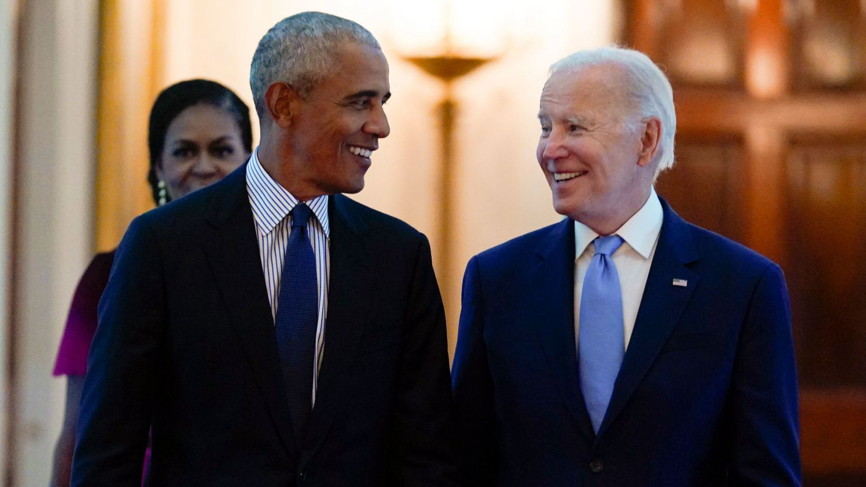
We knew the family court crisis was a national problem and figured they would rescue the children.