“Never, never be afraid to do what’s right, especially if the well-being of a person or animal is at stake. Society’s punishments are small compared to the wounds we inflict on our soul when we look the other way.”
Martin Luther King, Jr.
Social justice changes were blowing in the wind. In August 1963, over 250,000 people converged on the National Mall and heard the famous speech I have a dream. “The March on Washington was not merely about Martin Luther King Jr.’s iconic speech but was a clarion call for jobs and freedom—a demand that vibrated through the fabric of American conscience.”
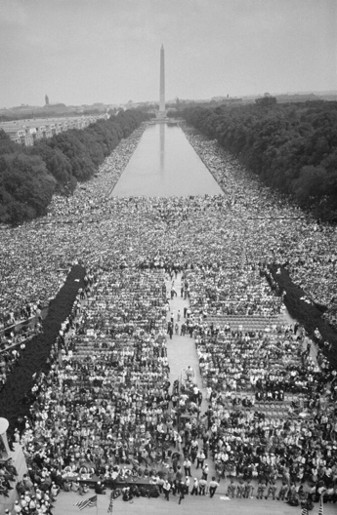
The marches and activism led to the Civil Rights Act of 1964. The civil rights movement affected all oppressed people, including women and children. There were steps forward towards equality and protection of children and adult victims of violence in the home.
Also in 1964, the first battered women’s shelter was established in California. The need for shelters and programs grew exponentially over the next half century as conferences and rallies began to raise awareness of the widespread violence inside quite normal-appearing families.
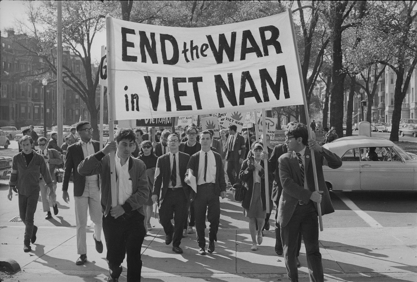
Violence outside the home was also erupting as the United States entered the Vietnam War and began drafting young men, which eventually led to massive protests. Young men drafted to fight in Vietnam began to be killed in a war that was inexplicable to most. Colonized by the French, Vietnam became a proxy war site against communism when the United States entered fully into the conflict in 1964.
By 1967, huge protests had sprung up across the nation and the United States finally withdrew in 1973, with no resolution. Nearly 60,000 American soldiers were killed along with over 3 million Vietnamese.
The Equal Employment Opportunity Commission (EEOC) was formed in 1965 to implement the Act.
California became the first state in the nation to implement a Victims of Crime Program in 1965 to reimburse victims for losses suffered for violent crimes. In 1966, Betty Friedan and other feminist pioneers formed the National Organization for Women (NOW) while attending the third President’s Commission on the Status of Women conference in Washington DC.
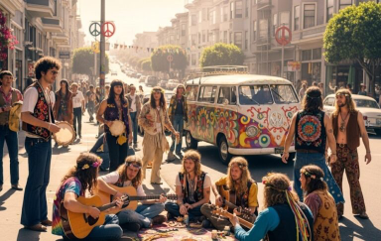
In the shadow of the war protests, teenagers began pouring into San Francisco during the 1967 Summer of Love, only to be preyed upon by older street-smart drug pushers. The Haight Ashbury Free Clinic was established to deal with the tragic fallout. Fed by the sex, drugs and rock n’ roll counterculture 1960’s experimentation, drug abuse spiraled out of control, becoming relatively mainstream.
Addictions increased, as did divorce. Families fell apart. Was the collapse of the nuclear family part of the big picture developed in the big philanthropic foundations’ early plan? If so, the plan was working well.
California Governor Reagan signed the “no fault” Family Law Act in 1969, the first of its kind. This was viewed as an equality measure by many, as it meant a divorcing spouse did not have to prove the other spouse was in the wrong. Congress passed the Controlled Substances Act in 1970. It was almost as ineffective as Prohibition. The drug culture was too strong.
Also in 1970, the NOW Legal Defense and Education Fund, later renamed Legal Momentum, was created by the founders of the National Organization of Women (NOW). It was the first legal advocacy organization for the rights of women and girls under the early leadership of Muriel Fox.
The next year, Bay Area Women Against Rape (BAWAR) began serving survivors of sexual assault in Alameda County, California. Although family role distinctions continued to dissolve, no longer defined by a working father and a housekeeping, child-rearing mother but by increasing parity, there was still a lingering legal and social question about women’s equality with men.
Finally, in 1971, the Supreme Court ruled for the first time in Reed v. Reed that the Fourteenth Amendment prohibited differential treatment based on sex.
However, it became increasingly clear that roles strongly influenced behavior, not just between genders. The Stanford Prison Experiment by Philip Zimbardo PhD, who was high school friends with Stanley Milgrim, was conducted in 1971. Normal students assigned as guards quickly turned sadistic when given unlimited authority over ordinary students who were assigned to be prisoners.
The study presaged the real life 2003 Iraq Abu Ghraib detention center torture by American soldiers in which helpless prisoners were brutalized by guards when there was no oversight of their behavior.
The unethical Zimbardo experiment was halted after less than a week when Zimbardo’s then girlfriend and future wife Christina Maslach threatened to break up with him over the cruel outcomes for students.
The Stanford Prison Experiment by Philip Zimbardo PhD, who was high school friends with Stanley Milgrim, was conducted in 1971. Normal students assigned as guards quickly turned sadistic when given unlimited authority over ordinary students who were assigned to be prisoners.
Their son cultivated the same Mephistophelian look as his father. He married two women who also married each other in a menage a trois, had a child by each woman, became a marriage and sex therapist and was active in Burning Man, an annual event held in the Black Rock Nevada desert featuring the burning of a giant effigy of a man. I often wondered what a psychoanalyst would have to say about the Zimbardo family dynamics.

The 1970s also saw a rise in child pornography, which became a featured item in “adult bookstores.” Prior to 1977, it was not illegal to make, produce or distribute such material. After the Protection of Children Against Sexual Exploitation Act was passed, child pornography went underground, only to surface again when the internet and “dark net” arrived. This did not bode well for children. This form of mostly male criminal entertainment is grotesquely unhealthy for children. Each picture or video is a crime scene of a child being sexually abused.
Divorce continued to increase. In 1972, California mothers received physical custody 80-84% of the time. Until 1973, domestic violence did not even have a name, and speaking about incest was still taboo. However, trauma began to be discussed more openly when Vietnam veterans returned writhing in pain from what they had seen and had to do. At the same time, the mask was being ripped off of family life from every social stratum, exposing dark secrets that had previously festered as private matters.
Slowly, bit by bit, child sexual abuse emerged from the darkest of shadows. It had been a popular perversion forever and a day. The only taboo seemed to be talking about it. Freud tried at the end of the nineteenth century but was shut down decisively and forced to recant, no doubt by those who were committing the child sexual abuse crimes.

The rampant sexualization of the U.S. population fueled by the free sex explosion in the 1960’s led to sex addictions and a new twelve-step program Sexual Compulsives Anonymous in 1973. Later, they were joined by other programs, including Sex and Love Addicts Anonymous (SLAA) in 1976; Sex Addicts Anonymous in 1977; Sexaholics Anonymous in 1979; and Sexual Recovery Anonymous in 1993.