“We must protect families, we must protect children, who have inalienable rights and should be loved, should be taken care of physically and mentally, and should not be brought into the world only to suffer.”
Indira Gandhi
The federal government tried again to address child abuse and neglect.
- The Child Abuse Prevention and Treatment Act (CAPTA), enacted in 1974, created the National Center for Child Abuse and Neglect (NCCAN) located within the 60-year-old Children’s Bureau.
- The Legal Services Corporation (LSC) was formed that year, to give equal access to justice. Established by Congress, it is a non-profit that provides grants to support quality civil legal assistance to low-income people.
In 1975, the Office of Child Support Enforcement was created. This was a double-edged sword, solving and causing problems that continue to this day. Studies show women initiate divorce 69-90% more often than men, a third due to substance abuse and a quarter due to domestic violence. Full child support is paid less than half the time.
Divorced fathers pushed for joint custody which would reduce or eliminate child support. In an interesting plot twist, abusers began expressing interest in being loving fathers, and receiving custody 70% of the time. They then asked for child support from their victims. It was and is the perfect revenge, and quite legal, although immoral.
On the positive side, the National Organization for Changing Men later renamed National Organization of Men Against Sexism (NOMAS), began as a social justice movement in 1975 for men who rejected the anti-feminist, male-self-interest philosophy of the “men’s rights” movement. It was and is a refreshing antidote to the patriarchal men’s movement.

In the midst of these monumental social changes, The New York Times reported on the illegal domestic activities of the Central Intelligence Agency (CIA), including experiments on U.S. citizens, during the 1960s. The U. S. President’s Commission on CIA Activities within the United States was set up under President Gerald Ford to investigate these activities and other intelligence agencies within the United States.
It was led by Vice President Nelson Rockefeller and is referred to as the Rockefeller Commission.
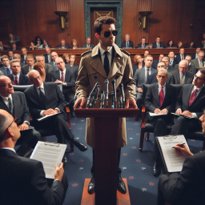
Most documents were destroyed by the time Congressional hearings exposed the CIA experiments. Those that remained showed that the CIA’s 149 sub-projects included the use of behavioral control techniques like electroshock and were located at 80 institutions.
Medical experiments had been conducted by the U.S. government, medical schools and major famous universities, including Johns Hopkins, Harvard, Tulane, Cornell, Vanderbilt, Columbia, and universities in New York, Michigan, Pennsylvania, Cincinnati, Rochester, Nebraska, Iowa, California, Washington, and Chicago.
These experiments had built on a century of hundreds of unethical, highly-secretive and often lethal experiments in the United States This negative social engineering made it difficult for reformers seeking to protect children, as some programs targeted young subjects.
The Senate Select Committee on Intelligence began looking deeper into the methods used by the government to test and experiment with covert drugs on unwitting citizens. The report in 1975 publicized Project MKULTRA, the CIA mind control program that severely harmed a subset of children used in experiments.
The program had been exported to Canada through payments to psychiatrist Donald Ewen Cameron, director of the Allan Memorial Institute psychiatric research hospital affiliated with Montreal’s McGill University. Cameron hoped to “correct schizophrenia by erasing existing memories and reprogramming the psyche… through ‘psychic driving’ …. consisting of intensive electroconvulsive therapy, prolonged drug-induced sleep, sensory deprivation, and repetitive audio conditioning techniques.”
These highly unethical violent governmental experiments were officially shut down when they came to light. However, later evidence showed that they had continued quietly.
On the family front, the nation’s first batterer treatment program was established in Boston in 1977 co-founded by Lundy Bancroft. The Emerge batterer intervention model in the large Boston metropolitan area focused on changing hurtful behavior through group education based on the theory that violence is a learned behavior.
1978 and 1979 were big years for domestic violence and child sexual abuse victim proponents and opponents.
- The National Coalition Against Domestic Violence (NCADV) was established, following the United States Commission on Civil Rights’ Consultation on Battered Women: Issues of Public Policy.
- In California, the California Alliance Against Domestic Violence (CAADV) was formed.
- That year, a “Take Back the Night” march against pornography was held in San Francisco.
- In 1978, Louise Armstrong wrote,Kiss Daddy Goodnight, A Speak Out on Incest
The opposition was also busy. The National Man/Boy Love Association was formed in 1978. It was a pedophilia advocacy organization, working to abolish age-of-consent laws. They openly flaunted the legal protections for children that had been put into place.
The next year, a grassroots group called the National Alliance on Mental Illness (NAMI) began advocating for people with mental illness and their families. NAMI was focused on psychological symptoms as brain malfunctions or chemical disorders to be treated with powerful psychoactive medications, rather than trauma that could be treated with psychotherapy.
The following year, Post-Traumatic Stress Disorder (PTSD) was included in the DSM-III, referencing war veterans, Holocaust survivors and rape victims, but also applied to victims of domestic trauma who displayed similar symptoms.
NAMI was focused on psychological symptoms as brain malfunctions or chemical disorders to be treated with powerful psychoactive medications, rather than trauma that could be treated with psychotherapy.
Meanwhile, “equal custody” became the focus of new fathers’ rights groups, especially California divorced father James Cook who successfully lobbied for AB 1480 in 1979. The new laws favored the parent who is “more likely to allow the child … frequent and continuing contact with the noncustodial parent.”
This led to splitting children’s time more or less evenly between parents, regardless of their ability to parent or their abuse history or the child’s wishes. King Solomon would have been appalled. Cook took his idea on the road, working with David Levy who later founded the deftly-named Children’s Rights Council in Maryland, to pass joint custody laws across the country.
Over the next few decades, children were not served well by American policy. The “tender years” doctrine of giving small children to mothers gave way to a gender-neutral “best interests of the child” standard. This standard is difficult to define or measure, so it is interpreted in different ways. It was expected to protect children from abusive parents, as it would certainly not be in the best interest of a child to be placed at risk of harm. However, the vagueness of the term led to many bad outcomes.
Legal protections and due process vanished as mediators began making custody recommendations, with no hearings or testimony under oath, and judges tended to follow their recommendations. Even when the domestic violence was reported to law enforcement, there were few arrests made as it was considered essentially a family matter.
Legal protections and due process vanished as mediators began making custody recommendations, with no hearings or testimony under oath, and judges tended to follow their recommendations.
The National Child Abuse Coalition was created in 1979 to pressure Congress to create more laws against child sexual abuse.
In 1979, Lenore E. Walker, PhD published The Battered Woman Syndrome which was a big leap forward for domestic violence victims.
More victim-friendly initiatives passed, including the Crime Victims Bill of Rights and a California Victims’ Services Unit, thanks to grassroots movements of crime victims. California also funded rape crisis and victim/witness centers to support victims of abuse.
Yet children were not protected in family court.
Abusive men gained traction. Voluntary counseling services for men surfaced to help them get joint custody. Parents increasingly could not afford attorneys, so expensive litigation gave way to court mediation, including mediating crimes and substance abuse.