“You just can’t beat the person who never gives up.”
Babe Ruth
In the early 1980s, a small community in northern Minnesota pioneered the Duluth model of domestic violence to keep victims safe by holding batterers strictly accountable through a coordinated community response. They found the most effective response to spousal violence was to arrest aggressors and put them in jail.
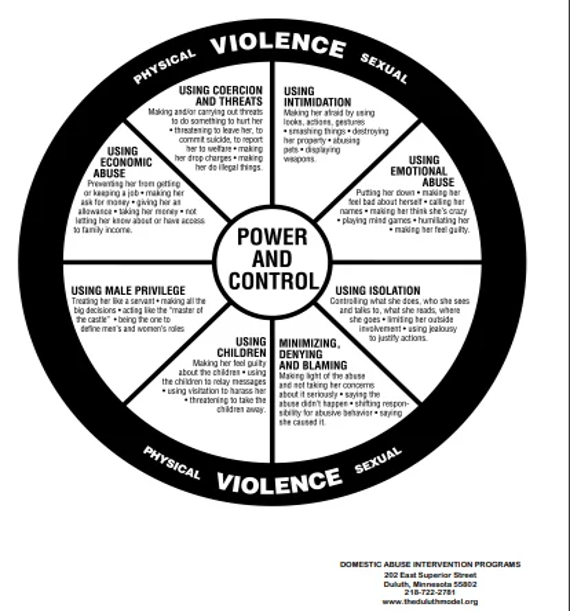
They found the most effective response to spousal violence was to arrest aggressors and put them in jail.
Later research found that less than 2% of perpetrators actually spent any time in jail. This was due to many factors, including lack of arrest or prosecution of perpetrators and hesitance of victims to testify against a violent spouse who had threatened them.
Batterer treatment was another potential solution. If the perpetrator stopped the toxic behavior, the family could stay intact if the victim wanted. It appeared to help certain batterers, at least to some degree, although other batterers, particularly the very possessive, domineering, belligerent, unpredictable ones, appeared to be incapable of being rehabilitated.
This latter population contained domestic killers. Professor Evan Stark described the behavior of strategic on-going oppression and terrorism in Coercive Control: How Men Entrap Women in Personal Life.
But how does a victim or a judge tell the difference between a partner who might be amenable to rehabilitation and a potentially lethal perpetrator? MOSAIC threat assessment was developed by government security specialist Gavin de Becker in the early 1980s to assess threat levels, especially for protecting Hollywood stars from obsessed fans, which laid the foundation for threat assessment.
Nurse Jacqueline Campbell conducted an Intimate Partner Homicide Study in Ohio in the early 1980s that gave rise to the Danger Assessment, a research-based lethality risk instrument. Campell found high risk factors for being murdered included being the victim of prior violence, especially when it escalated. Access to a weapon was an important indicator, as was strangulation.
Later research found a woman’s perception of danger may be even more predictive. This came from our ancestors’ scanning the savannahs for lions. The ones who paid attention got to live another day.

Attempts to get a grip on domestic violence and child abuse were dizzying. A plethora of coalitions and agencies sprang up all over the country. A few are named here for historical purposes, to honor the unnamed domestic violence victims and their allies who gave their time and resources to help stem violence against women and children. They took the long view and began planning a way to address the issue on the federal and state levels. It would take a long time.
- In 1980, the NOW Legal Defense and Education Fund established the National Judicial Education Program to Promote Equality for Women and Men in the Courts (NJEP) to bring parity for underserved women in court, and invited the newly-formed National Association of Women Judges (NAWJ) to co-sponsor.
- That year, the California Alliance Against Domestic Violence (CAADV) united five regional coalitions (Northern CA Support Services, Central CA Coalition on Domestic Violence, Southern CA Coalition on Battered Women, CA Women of Color Against Domestic Violence, and the Western States Shelter Network). CAADV ultimately became CA Partnership to End Domestic Violence (CPEDV).
- The California State Coalition of Rape Crisis Centers was founded in 1980. It became the California Coalition Against Sexual Assault and was later named VALOR.
- Also in 1980, after hearing a speech by Martin Luther King, social worker Esta Soler applied for and received a federal grant and embarked on an anti-violence campaign. She partnered with other organizations and her Family Violence Project, ultimately named Futures Without Violence, helped develop and later pass the landmark Violence Against Women Act (VAWA). In her 2013 TedTalk. Esta Soler stated that between 1993 and 2010, domestic violence had dropped by 64%. The 1980s activism was very successful for adult victims. She added, “We’ve gotta do a better job for our kids.”

By 1980, Congress had passed The Adoption Assistance and Child Welfare Act (AACWA) to decrease the number of children in foster care and the time they spent there, and to provide reunification with their parents. The downside was that states began to reunify biological families even when the parents were not rehabilitated, and children faced the risk of suffering abuse by their family, enormous dislocation of foster care, then further abuse by their family.
- During the 1980s, U.S. Department of Health and Human Services Administration’s Children’s Bureau created the Children’s Justice Act program to help states improve handling of cases, particularly child sexual abuse cases.
- The Netherlands Hague Conference on Private International Law (HCCH), an intergovernmental organization that administers several international conventions, drafted the Hague Convention on the Civil Aspects of International Child Abduction. It was designed to prevent child abduction across international borders.

Most people thought in terms of scary abusive men snatching children and moving to a foreign country, or wicked traffickers forcing children into brothels. But this convention also worked against mothers trying to protect their abused children when courts did not. If they defied a court order and fled to another country, they were found and incarcerated.
Books on divorce and child sexual abuse began to be published.
- Judith Wallerstein and Joan Kelly wrote Surviving the Breakup-How Children and Parents Cope with Divorce in 1980 based on the small Children of Divorce Project in elite Marin County CA that studied how children, adolescents and their parents cope after a family dissolution. It was not focused on family abuse but was important information on the negative residual effects on children of divorce, even with non-abusive divorcing parents.
- Discussing sexual abuse was still not done in polite company, much less ritual abuse. Dr. Roland Summit helped to break the taboo of talking about child sexual abuse by describing the normal reaction to child sexual abuse in the Child Sexual Abuse Accommodation Syndrome.
- Certain perpetrators were shocked when a groundbreaking book Michelle Remembers was published in 1980. Written by Canadian psychiatrist Lawrence Pazder and his patient and future wife, Michelle Smith, the book documents her journey through memories of being used in satanism as a child. There was an enthusiastic effort to debunk the information.
- In 1981 Judith Herman wrote Father-Daughter Incest which helped break open the well-kept, well-known secret. Some fathers sexually prey on their daughters. The daughters are silenced, told they are delusional and labeled with Freud’s nonsensical Oedipus Complex, that little children sexually desired their fathers, rather than the other way around. This coverup, concocted a century before, was being exposed.
The pedophile priest scandal was also coming out of the closet California priest Donald Roemer was arrested in 1981 and pled guilty to molesting 30 children. In 1983, Louisiana priest Gilbert Gauthe was accused, then pled guilty to molesting 37 children and was convicted of sexual abuse against 11 boys. The doors were beginning to open. At the time, these cases were considered isolated instances. In retrospect, they were portents.
Attorney Jeff Anderson said, “I pulled on the string and the scandal and coverup unraveled.” Dominican priest Thomas Doyle wrote in the National Catholic Reporter, “The lid of secrecy was pried open in 1983 and gradually, over the next few years, we began to see a horrifically different vision of the institutional Church. This was not the discovery of a new problem for the church. It was the steady unraveling of a paradigm that depended on power, image, deference and above all, clericalism, to survive.”
He went on, “This time the victims did not cower in a darkened corner, overwhelmed and controlled by the hierarchy. This time, much to the shock of the s, the clergy and a significant segment of the lay population, the victims stood up and refused to be intimidated into silence.” This chapter of Church history was radically different from the past encounters with clergy sexual misbehavior.