“The humanity of all Americans is diminished when any group is denied rights granted to others.”
Julian Bond
At the urging of social reformer Caroline Norton, the British Parliament established 1839 the Custody of Infants Act which gave married women, for the first time, a right to their children and a presumption for maternal preference in custody decisions known as the ”tender years doctrine.”
In 1848, three hundred people attended the first woman’s rights convention in Seneca Falls, New York. Their Declaration of Rights and Sentiments became the founding document of the American women’s civil rights movement. It stated in part, “He has so framed the laws of divorce, as to what shall be the proper causes of divorce, in case of separation, to whom the guardianship of the children shall be given; as to be wholly regardless of the happiness of the women – the law, in all cases, going upon a false supposition of the supremacy of a man, and giving all power into his hands.”
“He has so framed the laws of divorce …. to whom the guardianship of the children shall be given; as to be wholly regardless of the happiness of the women – the law, in all cases, going upon a false supposition of the supremacy of a man, and giving all power into his hands.”
The mid-1800’s were filled with social reform energy. Slowly, unsteadily, improvements and opportunities for oppressed people appeared as society began to change.
Most Americans had lived in rural communities and farms where it was easier to keep women and children in control in isolation. Life changed dramatically when the Industrial Revolution moved society from a rural, agrarian world where most men, women and children toiled all day to eke out a living from the land, to an urban, technical economy where most men, women and children toiled all day in factories.
Child USA wrote, “As the Industrial Revolution also took hold, children were used as workers in factories to help provide income for their families, in the same way they would have helped out on the farm to keep the farm running. However, factories were far more dangerous, and the hours were long and children suffered many injuries as a result of their work including bronchitis, tuberculosis, and loss of limbs.”
Children’s rights and protection is a relatively new phenomenon. According to the Old Testament, a stubborn or rebellious son could be stoned to death. Women were in a similar situation.

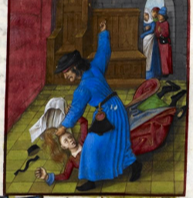
The New Testament had a different message, one of compassion. Responding to the abuses in factories, advocates for children initiated child labor laws, fueled both by a secular desire for children to be educated and a religious fervor for children to read the Bible, hopefully focusing more on the New Testament.
Women also began to gain more protections. For example, Tennessee became the first state to outlaw wife beating in 1850.
Trade Unions arose to help adult workers, first calling for a minimum age for factory workers. Slowly children gained better working conditions, but they still died in alarming numbers. Disease was rampant. If they reached adulthood, they usually didn’t live much past 40 or 45.
In 1851, the Adoption of Children Act was passed in Massachusetts, which focused on the well-being of children rather than the interests of the adult. Home visits by kindergarten teachers and public health nurses taught parents better child rearing. In 1853, a free foster home movement New York Children’s Aid Society arose, due to concern about the large number of immigrant children sleeping in the streets. In 1857, the French Medical-Legal Studies of Sexual Assault documented sexual assault of children, a first.
Oppression of black Americans continued unabated. The Dred Scott Supreme Court decision cemented the institution of slavery.
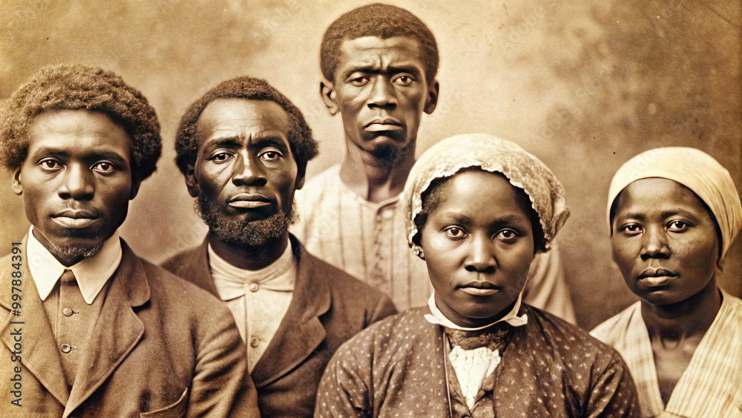
Despite a deep sense of despair, Frederick Douglass predicted, “This very attempt to blot out forever the hopes of an enslaved people may be one necessary link in the chain of events preparatory to the complete overthrow of the whole slave system.”
On January 1, 1863, President Abraham Lincoln signed the Emancipation Proclamation. By 1865 after a bloody Civil War, Frederick Douglas’ prediction became a joyous reality. Four million enslaved people became legally free under the Thirteenth Amendment. It had been a long, long 246 years since the first slave ship arrived in Jamestown, Virginia. The very air must have shifted, and breathing became possible.

The vicious backlash came. The Ku Klux Klan rose up in the south for a shockingly brutal period until federal law enforcement suppressed the first wave of chapters. The right of ownership and oppression by powerful white males was beginning to crack.
The first American Society for the Prevention of Cruelty to Animals in New York was founded in 1866 by Henry Bergh, complete with a Declaration of the Rights of Animals, patterned on the British Royal Society. It seemed the beginning of a type of pre-empathy for creatures who were previously thought of as non-sentient or “lesser” by white male owners of animals and family members.
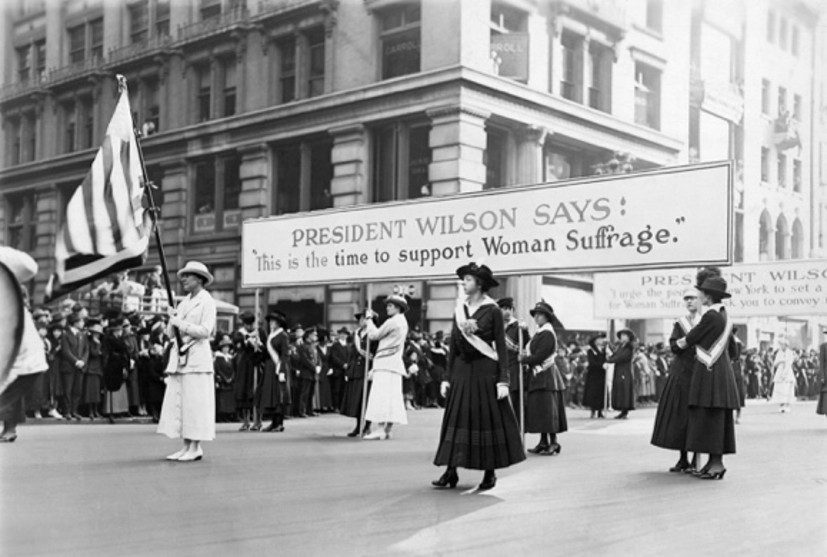
Susan B. Anthony and Elizabeth Cady Stanton founded the National Woman Suffrage Association in 1869, and a decade later joined the American Woman Suffrage Association to form the National American Woman Suffrage Association.
In 1872, the Bohemian Club was founded in San Francisco. They later purchased a property called the Bohemian Grove which became a rustic secret encampment for powerful and influential men, including heads of state. Their strange rituals and sophisticated security system gave rise to ongoing concerns. It was a blatant display of collective male power, a type of dark elitist frat house.
Another social ill that often led to family abuse was alcohol abuse. To combat the rampant alcoholism that was breaking up families and negatively impacting women and children, the Woman’s Christian Temperance Union was founded in 1874, later led by Francis Willard.
Children came last. According to psycho historian Lloyd deMause, “The history of childhood is a nightmare from which we have only recently begun to awaken. The further back in history one goes, the lower the level of child care, and the more likely children are to be killed, abandoned, beaten, terrorized, and sexually abused.”
“The history of childhood is a nightmare from which we have only recently begun to awaken.”
Nearly a decade after animals were protected, the New York Society for the Prevention of Cruelty to Children was established in 1875, as the world’s first organization devoted entirely to child protection. There was certainly a need, since age of consent to sexual relations was between seven and ten years of age in the late 1800’s.
Then the pendulum began its inexorable swing, and overt backlash against freedom for vulnerable people began again. Much of the oppression had just gotten a slightly less overt, but there was a tiny glimmer of hope.
As the nineteenth century came to an end, European psychiatrist Sigmund Freud also brought to an end his early belief that his female patients had been seduced and sexually abused, often by their fathers. He had accurately described their depression as anger turned inward. Sexual violations could result in anger.
But he was attacked by other psychiatrists for his ideas and ultimately bowed to powerful social forces, including the fathers, to recant those beliefs. He declared that seduction was, in fact, untrue and theorized that children sexually desired their fathers, not the other way around. He labeled it the Oedipus Complex, thereby neatly diverting attention away from adult male seducers. His theories affected physicians and victims for over a century and continue to do so today.
Incest was neatly swept under the rug.