“If you think you are too small to make a difference, try sleeping with a mosquito.”
Dalai Lama
Research. We knew we needed data. Geraldine Stahly Ph.D., attorney Meera Fox J.D., founder of Child Abuse Solutions, Inc., and I developed a one-page survey with 101 questions for research into the problem. We sent the hard copy surveys to mothers and advocates, and distributed them at conferences, starting with the 2001 FVSAI conference in San Diego. Completed surveys began arriving at our post office box in 2002.
The research project was of paramount importance. We hoped to get an overview of the family court problem through an in depth look at cases. Dr. Stahly presented the national data powerfully at conferences in a poster format. The outcomes were worse than expected. The early data were very close to the final data, showing that 75% of children (85% in California) were placed in unsupervised contact with alleged or adjudicated abusers.
Ultimately, we collected 399 egregious cases from 39 states. I learned that the method was called a “sample of convenience.” The participants were self-selected. They were the ones with the devastating cases who found their way to us. We wanted to study this social disease and where we should focus to stop the spread, like cancer research, starting with people who had the disease, then moving to formal research. The study was ultimately published in 2022.
We wanted to study this social disease and where we should focus to stop the spread, like cancer research, starting with people who had the disease, then moving to formal research.
Interestingly, only three men returned surveys. All reported that they had been accused of abusing their children and all wrote remarkably abusive comments on the margins of their forms. They were not included in the outcomes, as we were surveying protective parents. At the time we had no idea it was such a clearly gendered issue.
All this knowledge helped understand the scope, but did not solve the problem.
Advocacy. We were astonished when an even bigger check ($25,000) arrived in 2001 from our angel donor, along with many individual donations. We were getting 2 to 3 calls a day from frantic mothers all over the country, so we decided to focus on advocacy that year. Karen and Katrina Ross-Scott from Moses Advocacy were paid to advocate for mothers on a case-by-case basis. We rented an office in Sacramento in February 2002 and furnished it with surplus furniture, including an impressively huge wooden desk.
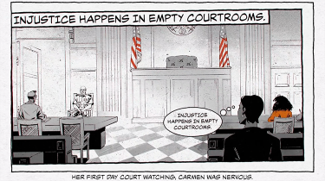
Volunteers fielded the daily phone calls and emails, and validated, nurtured, supported and cried with mothers whose children had been given to abusers. Jean and I went to court with the mothers to support them. The judges saw us taking notes. We learned that court watch made them nervous although we didn’t realize we were doing court watch at the time.
Volunteer advocates were fingers in the dike against a flood of children being placed with abusers so we tried our hand at grant writing so we could pay them. The competition was stiff, and we were a new group trying to defy the status quo. No government grantor wanted to go up against elected or appointed judges. Our grants went nowhere.
Education. The problem was largely unknown to anyone outside the family court system. Mothers and children who were personally caught by a leg in the trap and abusive men who had put the system into place originally, knew all about it. We started educating the public, our allies, legislators and oversight agencies in mental health, child welfare and law enforcement on every level in every way we could.
The first thing we did was try to warn mothers before they walked into the trap. We made a brochure. Our social justice movement Mothers of Lost Children had a handbook titled Warning to Mothers: Family Law Court and the Legal System May Be Hazardous to Your Health and Your Child’s Safety. It was a fine description, but a mother wouldn’t even think to look for it unless she was already knee deep in the situation and wanted confirmation that she wasn’t nuts. We made it clear that the system was nuts, not the protective mothers.
We continued praying at 9:00 pm and taking Weekly Bulletins to Legislators, wearing our yellow t-shirts with Josie’s son’s picture on the front and Judge Peter McBrien’s picture on the back. The Legislators were mildly interested. Press was slim. Journalist Mareva Brown did manage to write an article on Josie’s case, without names, although it was clear the Sacramento Bee did not want to expose the court.
Our Davis conferences were co-sponsored by Incest Survivors Speakers Bureau and CA Protective Parents Association. On April 8, 2000, the keynote speaker for the Sixth Annual Child Sexual Abuse Awareness Conference Child Sexual Abuse and Professional Ethics was McGeorge Law School professor John E. B. Myers. It was a challenge to address an audience of lay people and attorneys at the same time, but he did a great job of explaining how dismal the court system was for sexually abused children.

He had written the internationally acclaimed two volume Evidence in Child Abuse and Neglect.
We had networking and letter writing as part of the conference, along with a quilt square project which turned into more survivor quilts made by Linda Day and Lynn Fisher. We invited local politicians to speak. We gave and received awards. We gave continuing education credits. We were happily exhausted after every event.
A group in San Luis Obispo began a newsletter called The Real FACTS. There were increasing numbers of articles and media documenting the custody war against mothers and their children, including Crimes of CustodywithAlanna KrauseonKCAL Channel 9. We took part in public hearings. We contacted dozens of national, state and county agencies that were supposed to keep children safe. We wrote letters to the media. Assemblywoman Sheila Kuehl requested an audit of the Los Angeles court secret judges’ fund. My congressman responded politely. We sent 1,000-page binders of information to the Attorney General and to Governor Grey Davis and to the FBI. Nothing. Not even a thank you note.
Nothing stopped the juggernaut.
We were driven. We met with a professional grant writer from Mercy Health Care Foundation in July 2000 who advised us to expand our board to ten members, including an attorney, medical professional, media person, church leader, teacher, certified public accountant and a mix of gender, ethnicity, age, and professions with uninvolved people.
- We needed an advisory board that would meet every other month.
- Our message needed to be positive and demonstrate a few victories, not just horror stories.
- We should put our mission on the front of the brochure, have information and statistics on a fact sheet and articulate our vision, to be recognized as a statewide resource for non-offending parents to protect children from incest.
- We should find insiders, such as attorneys, to learn to play the game of court.
- We should focus on five county regions, have a conference, be on talk shows, have a newsletter, send letters to the editor, get to know reporters, send informational packets.
- We should become a viable respectable resource, build relationships, speak to new organizations and service clubs, network, coalesce with other groups, collaborate, fill a niche.
- We should do direct mail appeal for donations, have special events, appeal to people we know. We should go to the National Society of Fundraising Executives, Women and Girls Capacity Building, Nonprofit Resource Center.
- We should apply for grants from PG&E, Intel, Miriam Houghten, and CA Endowment and CA HealthCare Foundation which were created when nonprofit Blue Cross bought a for-profit organization in 1996.
This was all great advice on building a solid organization, but we basically didn’t even want to be doing what we were doing, much less build a long-term organization. As Jerry Garcia of the Grateful Dead once said, “Somebody has to do something. It seems incredibly pathetic that it has to be us.” We still thought we would let people know, and someone would fix it. If we had known how resistant the world was to our message, we might have hired a cracker jack fundraiser. But we didn’t know.
“Somebody has to do something. It seems Incredibly pathetic that it has to be us.”
In 2000, the California Judicial Council reported that domestic-related filings (i.e., family law and juvenile dependency petitions) were 34% above their level a decade before. Why would they put up with a rogue judge like Peter McBrien who only increased the judiciary’s work with his behavior? They could have assigned him to traffic court to sideline him.
On April 24, 2000, the Pasadena Star News ran an article by Gina Keating titled Critics Say Family Court System Often Amounts to Justice for Sale. We clung to these few articles that validated what we were seeing with our own eyes but could barely believe.
We were horrified to realize the child death, our biggest nightmare, was becoming a reality, not a remote possibility. On August 2, 2000 the Pittsburg Post Gazette articleCasualties of a Custody War: The courtroom as battleground reported on the suicide of young Nathan Grieco who hanged himself with a belt in his bedroom.