“There’s always a way if you know the right people.”
Roy Nixon
Lynn Rosenthal said VAWA could fund court watch. That was terrific news. She considered school-aged children were better able to protect themselves as they could tell a teacher, so resources should be focused on children under three. I wasn’t so sure, given the information Judge Salcido had just revealed.
Judge Salcido also discussed the sexist culture along with the wink-and-nod training by Judge Mize and anecdotal remarks by her superiors to be “highly suspicious of abuse allegations in custody cases.” If the victim of violence is a child or a female, they get “Chevy Justice,” she said. “Cadillac Justice” was reserved for more important cases.

The conflict of interest when one party paid attorneys for the minor was brought up. We discussed the lack of accountability and suggested a Federal Grand Jury Second Look Commission. Tennessee had implemented a Second Look Commission to review “an appropriate sampling of cases involving a second or subsequent incident of severe child abuse in order to provide recommendations and findings to the General Assembly regarding whether or not severe child abuse cases are handled in a manner that provides adequate protection to the children of this state.”
Our idea was to have this replicated as a federal oversight body that would scrutinize cases in which children were placed in danger. The next day, Lynn Rosenthal held a two-hour Listening Session. She was wonderful. We felt hope again.
A year after Alycia Mesiti Allen’s remains were found by cadaver-sniffing dogs in Ceres, CA, the landmark AB 1050 (Ma) was passed and signed by the Governor on August 27, 2010.
Fourteen-year-olds were finally given the right to speak directly to family court judges if they wished under Family Code section 3042(c), unless the judge did not think it was in their best interests. We were thrilled.
Teenager Rebecca K. testified at the hearing. She said that when she was 12, her Sacramento therapist Janelle Burrill grabbed her by the wrist and forced her into a room with her abusive father, saying she would charge the girl with contempt if she did not reunify with her father. Kathleen and Steve did incredible work on the bill.
We entertained ourselves by requesting that the Sacramento Police Department conduct a criminal investigation of Janelle Burrill for manhandling the teenager and had made many reckless recommendations placing children in harm’s way. Afterwards we picketed her office. That went nowhere.
Would it have made any difference if fourteen-year-old Alycia had been able to talk to Santa Clara Judge Chiarello directly? Given the bias in Santa Clara courts, it might not have helped, but at least now there is a chance now for teens to try to protect themselves. Before, they were forced to play a lethal game of “telephone” by speaking only to therapists, police, social workers, evaluators, mediators, attorneys for the minors. The children’s words were often twisted and even reversed by the time they reached the judges’ ears.
The upshot was that some teens were helped by the new law, but few knew about it. Most judges simply ignored it. Others were exceedingly cruel by making the teen testify in open court in front of their parents, even though rules of court spelled out the children should speak to the judge in chambers with a court reporter.
AB 939, the bill that resulted of the Elkins Family Law Task Force recommendations, was also signed into law that year. It focused on “family-centered case resolution” instead of “child safety-centered case resolution.” What was wrong with these people? Were they all fathers’ righters? Another bill SB 1253 (Strickland) was amended to contain a poison pill in Penal Code 1203.066(C) that we could not stop. It gave courts leeway to determine if it is in the best interests of a child to live in a household with a convicted sex offender. What madness.
It gave courts leeway to determine if it is in the best interests of a child to live in a household with a convicted sex offender.
But we knew freedom was possible. There were precedents, and hope. It took persistence and courage. After all, in the mid 19th century Abraham Lincoln freed the oppressed slaves by executive order. It took a century for African Americans to achieve anything remotely near equality and the struggle still goes on, but they were technically free.
The civil rights movement in the 1950s and 1960s consisted of acts of nonviolent protests and civil disobedience that often produced crisis situations between activists and government authorities. John Lewis’ “good trouble” was still trouble, and sometimes fatal.
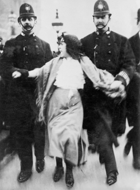
In the early part of the 20th century, younger suffragists tired of the more conservative methods used by Elizabeth Cady Stanton and Susan B. Anthony who were negotiating for women’s right to vote. A new group of vigorous younger women led by Alice Paul and Lucy Burns took to the streets demonstrating in front of the White House, and brought the suffrage movement to a head. They were imprisoned, tortured for wanting to vote. The media stepped in and exposed their suffering which changed the course of the movement.
In her book Stolen Years Sarah Zyskind wrote about living in the Lodz ghetto as the Nazis took over, from when she was 12 until she was taken to Auschwitz when she was 16.
“But there were interruptions in the dull routine of our existence. Every now and again, the Germans electrified us with some new shock… such an event occurred in September 1942…. The suddenness of the action caught us all off guard and gave us no time to collect our thoughts or defend ourselves. Trucks full of armed troops were already speeding through the streets of the ghetto, sealing off an entire quarter at a time.
A policeman with his list would enter a home to take a child into custody. Intimidated and confused, the mother would hand over her son or daughter, often no older than 2, 3 or 4. The moment the deed was done, the woman would suddenly realize what was happening. She would dash after the policeman and try to snatch her child out of his grasp. But by then it was too late…
There, one German trooper would hold the mother back at bayonet point, while another would snatch her child and shove it onto the waiting wagon. The wagon would move off and soon disappear from sight. Then the crazed mother would claw at her face, clutch at her hair, scream, wail, but all in vain. Her child was irretrievably lost to her.”
“Then the crazed mother would claw at her face, clutch at her hair, scream, wail, but all in vain. Her child was irretrievably lost to her.”
This was not just random cruelty or merely intimidation. “During World War II, around 200,000 ethnic Polish children …were abducted from their homes and forcibly transported to Nazi Germany for purposes of forced labour, medical experimentation, or Germanization. This was among the most notable Nazi crimes against children.”
Sarah Ziskind’s words still hang in my mind and hover over my heart. Our mothers knew this agony well.
That level of courage was more than we could imagine at this early point in our mother’s movement. We continued to follow the lead of Las Madres de la Plaza de Mayo. They wore white head scarves with their children’ names embroidered when they march in the Buenos Aires Plaza de Mayo every Thursday afternoon, not just for themselves but for other social causes.
The opposition was also busy. The men who believed that women and children belonged to them were infinitely more organized than we were, not spread so thin, focused on their own desires like birddogs. It was always shocking, but not surprising.
We began more outreach. I became a member of the California Partnership to End Domestic Violence (CPEDV). We were concerned that the IVAT conference in San Diego because workshops were being put on by the opposition. We even picketed one, then put on a workshop with Geraldine Stahly on the research.
We joined the new National Partnership to End Interpersonal Violence Across the Lifespan (NPEIV), held in conjunction with the September 2010 IVAT conference. Their Think Tank had working action groups, including best practices, research, dissemination of research, outreach/networking, funding, capacity building, technology, public awareness, public relations and public policy. I joined the public policy group with other activists. Action was the key word.
I ordered a bullhorn.

On September 17, we went to the Judicial Council building at 455 Golden Gate Avenue in San Francisco, held up our banners and signs, and handed out fliers to 100 people. Karen and protective mother Yupa delivered a packet to the FBI office that was compiled by Marin County activist attorney Barbara Kaufman on the crimes against children. The FBI office was located right across the street from Judicial Council headquarters.
We were amazed to find that on September 28, 2010, the National Coalition Against Domestic Violence (NCADV) had sponsored a federal Resolution HR 1637 (Poe) which recognized our National Safe Child Initiative. We felt honored and validated.
The Resolution did not mention family court but noted that 40-60% of men who abused women also abused children and at least 85% of abusers were men. Congress resolved to continue to raise awareness of domestic violence and its devastating effects. That was good.
Barry Goldstein became the acting director of our fledging National Safe Child Coalition. On September 30, he and I met with Lauren Nassikis at the Office of Violence Against Women (OVW) at 800 K Street to talk about OVW developing a violence against children division. She was encouraging.