“We are not to simply bandage the wounds of victims beneath the wheels of injustice, we are to drive a spike into the wheel itself. “
Dietrich Bonhoeffer
We drove down to Los Angeles to meet with the Senior Assistant Attorney General Julia Weng-Gutierrez of the Attorney General’s Bureau of Children’ Justice (BCJ) on October 6, 2017. CA Attorney General Kamals Harris had instituted the Bureau after the daughter of her Assistant Attorney General Marcia Fay was murdered by her father in a custody case. The website clearly states: “The Bureau’s mission is to protect the rights of children and focus the attention and resources of law enforcement and policymakers on the importance of safeguarding every child so that they can meet their full potential.”
They seemed to focus on children embroiled only in the child welfare system, not every child, as advertised. They were headquartered in Los Angeles, the epicenter of child welfare disasters. After trying our best to be polite when the Assistant Attorney General said dismissively, “Oh those are just ‘he said, she said’ cases,” Judge Salcido (ret), protective mothers Ana Estevez and Sandy Ross, and advocates Kathleen Russell and I finally got through the denial.
[The] Assistant Attorney General said dismissively, “Oh those are just ‘he said, she said’ cases.”
The BCJ attorney seemed shocked to find out the propaganda was untrue, the judicial training biased, the oversight non-existent, and the process skewed toward offenders. We were equally shocked that the top law enforcement agency in California was so clueless. Or compromised. I wrote to California Attorney General Xavier Becerra, explaining the disconnect. A polite reply came back, saying they were taking our concerns seriously. That was nice.
That day, I wrote to Yolo County District Attorney Jeff Reisig, requesting a protocol for children who reported sexual abuse, to keep them safe. The protocol would require a fast-track forensic examination, a victim advocate for the child, a search warrant and temporary restraining order for named abusers, and a system to ensure child safety. I suggested a Child Safety Task Force. Law enforcement was, after all, supposed to keep citizens safe.
Back at the California state Capitol, a wonderful aide we had worked earlier with blew the public whistle on Assemblyman Raul Bocanegra. On October 9, 2017 Elise Flynn Gyore told the press she wanted to counteract the denial of a pervasive culture of abuse at the Capitol ,and openly discussed being groping by the Assemblyman in 2009. He had received a hand slap.
Elise joined with hundreds of women who signed a letter about the overt workplace sexual harassment. She said she felt “like prey” after the incident, since Bocanegra still worked in the building with her and continued his pursuit of her. Bocanegra resigned a month later.
A friend told me a story. She used to work at the California State Capitol decades before and was told not to put room number signs on certain doors because they led to private rooms. Very private rooms. For dalliances. The California Assembly was quite the hotspot of closed doors, it seemed, but a window was now wide open.
#MeToo began its powerful journey on October 15, when actress Alyssa Milano challenged all sexually harassed or assaulted women to sign on. The term #MeToo was first used in 2006 by Tarana Burke. Now the time was ripe. It took off like wildfire.
Harvey Weinstein’s sexual predation was exposed for all to see by Cory Feldman who also named convicted pedophiles Jon Grissom and Marti Weiss as two of his molesters. He later described the Soda Pop Club, a nightclub for underaged kids and named Charlie Sheen, Alphy Hoffman, Bobby Hoffman and Dominick Brascia as abusers.
Another Congressman bit the dust. Texas Congressman Joe Barton’s gross sexually explicit photos ended his career in November 2017.
Sacramento lobbyist Pamela Lopez stated in December that Assemblyman Matt Dababneh had masturbated in front of her and urged her to touch his penis. I was at the Capitol and walked unknowingly into his office, where I was confronted by the Sacramento Bee in the rack on the credenza with a huge headline. ‘Dababneh Accused of Masturbating.’ I wish I’d grabbed the paper that day. It sent me into a fit of mortified teenaged giggles since it was so, well, so utterly dirty and sleazy.
Even groping sounded slightly less repulsive. He resigned shortly thereafter.
They were dropping like swatted flies. We prayed the scandals with adults would help child sex abuse victims be safe and to have to wait until they were grown up to say, “Me Too.” I agreed with Leto Sinclair’s comment, “I look forward to the day we stop saying ‘me too’ and start saying ‘never again.”
We had a film screening in Northern CA for Irish filmmaker Rachel Meyrick’s excellent documentary What Doesn’t Kill Me in November. It examined the custody battlefield in domestic violence cases. She had filmed one of our Mothers of Lost Children marches, and many of the mothers we knew were featured, telling their horrifying stories of children knowingly placed with fathers who beat, raped and sometimes killed them. It was a step forward in exposing the problem.
We continued to wonder why our carefully crafted laws were so carefully ignored at ground zero. Why was there such denial that administering and acting on lethality assessments was key and that common sense practices such as immediate arrest for breaking a restraining order, the very first time, were crucial, like the Quincy Model showed?
We continued to wonder why our carefully crafted laws were so carefully ignored at ground zero.
Would specialized domestic violence systems help? Are 52-week batterer treatment and substance abuse treatment and random drug testing critical? Law enforcement needs to engage violent men. Children needed to be consulted and respected regarding their preferences for visits. Children need supervised visits or no contact with violent batterers, so they could stay alive. They don’t lie about being abused and afraid.
Looking for a wedge, I tried to figure out how court employees were paid. Did the county have any oversight at all? It turned out to be complex, according to the court, but funding seemed to have no connection with the county. Judges and staff were paid by the Judicial Branch, using a totally different funding source. The Judicial Council paid for court facilities. The bottom line was that we now had state-elected, or Governor-appointed judges, making decisions in our county, sometimes wreaking havoc, but with zero local oversight.
Judges do not often stand for election. No attorney in his or her right mind would challenge a sitting judge. Unopposed, their names do not even appear on the ballot when the time comes for an election. It was pretty much a rigged game. On top of that, they were collecting paychecks and benefits from both the state and county, thanks to SBX2-11 that retrospectively authorized that illegal situation.
When we worked on the recall of Yolo County Judge Stevens back in the 1990s and Sacramento County Judge McBrien more recently, we found it was crucial to hire signature gatherers. That was too expensive, so we had to basically embarrass them into retiring. I was so impressed at the way our Board of Supervisors corralled Judge Basha. On the other hand, Judge McBrien had the last laugh by being hired back as a commissioner. We thought at the time these were just bad apples. Now we wondered where the good apples were.
In 2017, Yolo County Board of Supervisor Jim Provenza organized a Task Force on child sexual abuse. It was promising. I did not do a very good job keeping it focused on family court, and it soon swerved over into the child welfare lane, a totally separate silo. I was told by two people looking into corruption in Yolo County that there were “snakes in the circle”, meaning that some of the Task Force members were not on the right team.

In a possibly well-intentioned effort that backfired badly, social workers had started threatening battered mothers that if they didn’t leave their abusers immediately, their children would be removed. The local domestic violence shelter began filling up and overflowing. This placed children in even worse danger, as batterers rushed into family courts to get custody. Task Force conversations between the domestic violence folks and CPS became tense.
I gave data to the Task Force and sent a letter to our District Attorney on with statistics, including that our county child welfare services rarely substantiated child sex abuse any more. Why not? It was a microcosm in my own backyard of a disheartening macrocosm we had been trying to fix.
Then on December 31, 2017, a mother’s worst nightmare came true. We had started out looking at child sexual abuse and found ourselves staring into the abyss of Yolo County child murder.
Hamdy Rouin murdered his two daughters, nine-year-old Sara and twelve-year-old Sophia in such a manner that it made headlines all over the world, garnering international attention. The girls died of asphyxiation due to the inhalation of products related to the combustion of seat covers, according to Chief Deputy Coroner Gina Moya.
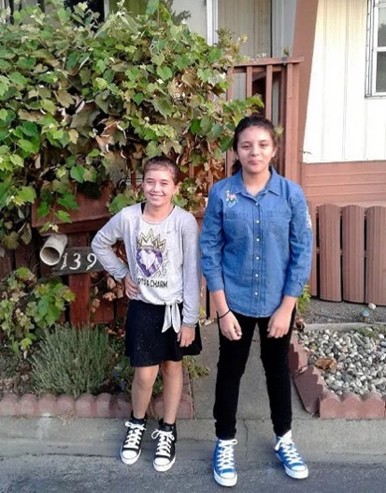
Court documents showed that a Sacramento court had given the mother a restraining order that covered her girls. Yolo County ignored evidence and gave Hamdy Rouin unsupervised visits despite his rampant alcoholism, threats to kill and a history of domestic violence Yolo County law enforcement had ignored multiple violations of the restraining order. One report said there were hundreds of violations.
There is no evidence of an official lethality assessment. How could that be? He killed the girls and himself two days before he was scheduled to go to court for restraining order violations.
Their grieving mother Amy Hunter believed it was due to the disconnect between law enforcement and family court. The community reeled. An international spotlight bore down on Yolo County. Two Yolo County judges retired to “be with their families.”