“An oppressive government is more to be feared than a tiger.”
Confucius
The government could act with devastating swiftness when needed. For example, on February 20, 2009, SBX2-11 (Steinberg) slipped through practically overnight under everyone’s radar screen. The budget was held up until the bill was signed by the Governor.
SBX2-11 allowed judges to continue to receive supplemental county benefits, even though they were now state elected officials. They were given retroactive immunity for double-dipping. It was clearly illegal. I tried to imagine any other state employee receiving county benefits in addition to a state paycheck. There was no place in my head for that concept to fit.

The process implicated all three branches of government in a single scheme.
This issue came to light after Richard Fine, a dapper elderly Beverly Hills international attorney with a Ph.D., formerly with the Justice Department, filed multiple appeals against Los Angeles County’s Superior Court judges beginning in 2000. He called their $50,000 extra county supplemental benefits “yearly bribes” giving judges incentives to rule on the county’s behalf in lawsuits.
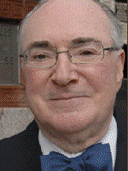
He won a case showing the extra benefits were indeed unconstitutional.
For his courage, he was promptly disbarred, then arrested, jailed and put into solitary confinement on March 4, 2009 where he languished for the next 18 months. I learned another term, “coercive confinement” which is jail-time until a person follows a judge’s order. The deeply unsettling and frightening case finally broke on March 19, 2009 in the Capitol Weekly.
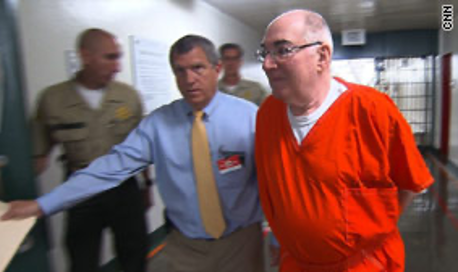
Richard Fine was quietly released on September 18, 2010. The saga of illegal payments to judges continued. We continued to be shocked but not surprised.
I was learning that good bills can be undercut and basically neutered by the opposition or allowed to die in the Appropriations Committee if there is a high cost attached, and someone doesn’t like the legislation. It was a chess game with the highest of stakes.
What a swamp.
Kathleen and I started working with Assemblyman Jim Beall, a genuinely good man whose close circle had personal experiences with batterers. Jim Beall is a big man in many ways. He looks like a beloved grandpa, but inside, he is a fighter with a heart of gold, looking to find ways to protect vulnerable people.
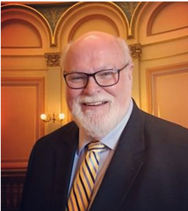
He was willing to pick up where Assemblyman Ira Ruskin had left off and move forward to prohibit junk science. He added coauthors Assembly Members Ma, Smyth, Torrico and Senator Yee, and on February 25, launched the new bill which oddly had the same number AB 612 as the past two years. We hoped the number wasn’t a jinx.
“… The bill would also provide that unproven, nonscientific theories, including, but not limited to, alienation theories, as specified, are not consistent with generally accepted clinical, forensic, scientific, diagnostic, or medical standards. The bill would prohibit a court from relying upon an unproven, unscientific theory and from accepting into evidence any finding provided by an expert witness or court appointed professional who has relied on an unproven, nonscientific theory that is a basis for that finding.”
The idea seemed so logical, so right. We thought it should be an easy fix. We were so wrong. Again.
Kathleen and I met with the chair of the Assembly Select Committee on Domestic Violence Assemblywoman Fiona Ma’s staff about holding a hearing on the family court crisis. We brought litigants and advocates to speak with her directly, which was a turning point.
On February 27, 2009, Assemblywoman Ma authored a “spot bill,” a bill with minimal language that would be completed before it moves into the legislative process. AB 1050 became a bill to allow children aged 14 or older to address the court regarding custody or visitation, if the child wishes. I was starting to grasp how many players are involved in the Legislative process.
In March Senator Mark Leno agreed to author an audit of family court through the Joint Legislative Audit Committee (JLAC) thanks to Kathleen.

We worked on gathering allies, including County District Attorneys, County Welfare Directors, and groups like Crime Victims United and Prevent Child Abuse.
Marivic began looking for funding for us. She and Kathleen understood well what levers to pull and what buttons to push. I was still struggling with names and positions, trying to absorb, boggled by all the complexity and competing interests, the importance of the committees, the alliances, factions, personal vendettas, the palace intrigue.
It was a sausage-making machine, and I was again out of my league. I liked to play checkers and this was three-dimensional chess. No wonder Karen and I with our t-shirts and one-page histories did not make much of a dent, although we did educate people at the Capitol.
It was stunning to see how the machine worked behind the curtain.
On March 16, we joined CPEDV for a Legislative Action Day at the Capitol “March to End Domestic Violence.” The California Family Code section 6211 definition of domestic violence includes violence against a child. We belonged under their umbrella.
Kathleen went to a staff briefing in Washington DC with House Majority Leader Steny Hoyer’s office on March 23. His daughter Anne had a case in family court, so he was fully aware of the pitfalls.

There were 6 or 7 staff members. Joan Meier, Richard Ducote, Joy Siberg, Teri Harper from NCADV, Irene Weiser, Eileen King, Shelly Rubin, Elizabeth Liu from DVLEAP were among the 30 people who attended.
Law professor Joan Meier asked for a Congressional Resolution, as it would affect state policy. Kathleen asked for funding to be tied to state actions. Steny Hoyer came to the meeting and saw a bit of her film Family Court Crisis, which pointed out this is a national crisis.
On March 27 and 28, 2009 Kathleen and Meera attended an FCRC meeting in DC in person. Marivic and I were on the phone. Garland Waller said Congresswoman Carolyn Maloney was interested.
It was a busy spring for our little team.
We gathered other California organizations and held a lobby day on March 31, 2009 at the Capitol to support Senator Mark Leno’s audit request, along with AB 612 (Beall) to get rid of junk science and AB 375 (Neilsen) to prohibit changing custody in an ex parte hearing unless there is immediate harm to the child.
The California Judges Association and FLEXCOM, the Family Law Executive Committee of California Lawyers Association, rose up against the bills and both bills sadly died in the Senate. We never knew exactly what happened behind the scenes, but we did know from historical events that opposition to mothers keeping their children in divorce was strong among men who wanted control.
We needed more “people power.”